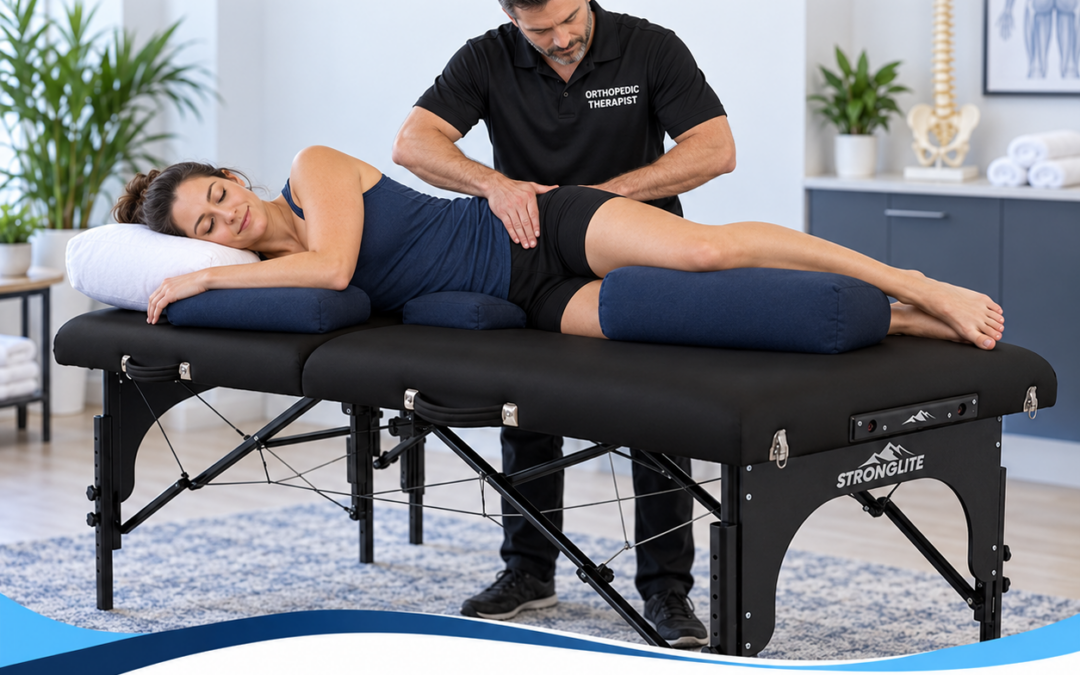
Why Side-Lying Positioning Can Improve an Orthopedic Massage Session
Many people expect to spend an entire massage session lying face-down. Although face-down positioning can work well, it is not always the most comfortable or effective position for every client or treatment goal.
Side-lying positioning can provide another way to support the body while giving the therapist better access to the hips, pelvis, quadratus lumborum, ribs, thoracic spine, shoulders, and neck.
It may also be useful for someone who cannot comfortably lie face-down because of pain, surgery, pregnancy, breathing difficulty, limited mobility, or sensitivity through the chest or abdomen.
At Orthopedic Massage Therapy in Grapevine, Texas, I use positioning based on the individual—not on the assumption that every person should receive treatment in exactly the same way.
What Is Side-Lying Positioning?
In a side-lying position, the client rests on one side while the head, torso, arms, pelvis, and legs are supported with appropriately placed cushions.
The position may look similar to sleeping on one side, but the support is arranged specifically for treatment. Cushions can help keep the neck comfortable, prevent the upper shoulder from collapsing forward, support the waist and pelvis, and reduce pressure between the knees.
The client should not need to hold the body in position. The supports should provide enough stability that the muscles can begin to relax.
The arrangement can be adjusted throughout the session depending on the area being treated and how the client feels.
There Is No Single Best Treatment Position
Face-down, face-up, side-lying, and seated positions can all be useful during orthopedic massage therapy.
The best position depends on several factors:
-
The client’s symptoms
-
The area being treated
-
Previous injuries or surgeries
-
Current mobility
-
Breathing comfort
-
Pregnancy
-
Sensitivity through the chest or abdomen
-
The client’s personal comfort and preferences
A position that works well for one person may not be appropriate for another.
Orthopedic massage therapy should adapt to the client instead of forcing the client to adapt to a standard routine.
Better Access to the Hips and Pelvis
Side-lying positioning can provide clear access to the lateral and posterior hip.
This may include areas around the:
-
Gluteal muscles
-
Deep hip rotators
-
Outer hip
-
Iliac crest
-
Upper thigh
-
Sacrum
-
Pelvic fascia
The upper leg can be positioned differently to evaluate how movement changes through the hip and pelvis. The therapist may also be able to work with the hip while it is gently flexed, extended, or supported in a neutral position.
Because the client is supported, the therapist can address restrictions without requiring the client to actively hold the leg.
This can be helpful when examining how the hips and pelvis may be contributing to lower-back, knee, or upper-body discomfort.
Accessing the Quadratus Lumborum
The quadratus lumborum, commonly called the QL, is a deep muscle on each side of the lower back. It connects the pelvis, lumbar spine, and lowest rib.
The QL helps stabilize the lumbar spine, control the lowest rib, bend the torso to the side, and support the body during walking and standing.
One QL may work harder when a person regularly:
-
Stands on the same leg
-
Carries weight on one side
-
Sits unevenly
-
Has a restricted hip
-
Compensates for a previous leg injury
-
Walks with an uneven pattern
In a face-down position, the QL may be difficult to access from certain angles. Side-lying can expose the space between the lowest rib and the pelvis while allowing the client’s torso and legs to remain supported.
This does not mean aggressive pressure should be applied. The QL is deep and connected to several sensitive structures. Treatment should be careful, purposeful, and based on the client’s response.
Working With the Rib Cage and Thoracic Spine
Side-lying can also provide useful access to the side of the rib cage and thoracic spine.
The ribs need to move during breathing and torso rotation. Restrictions through the muscles and fascia around the ribs may influence movement through the thoracic spine, shoulders, neck, and lower back.
In a supported side-lying position, the upper ribs are more accessible. The client may also be able to breathe into the upper side of the rib cage with less pressure from the table.
Treatment may address soft tissues associated with the:
-
Lower ribs
-
Thoracic spine
-
Muscles between the ribs
-
Latissimus dorsi
-
Serratus muscles
-
Quadratus lumborum
-
Diaphragm region
-
Shoulder blade
Massage therapy does not treat respiratory disease. However, addressing muscular and fascial restrictions may help the rib cage move more comfortably during normal breathing and activity.
The Shoulder Blade Can Move More Freely
The shoulder blade must glide along the rib cage when the arm moves.
In a face-down position, part of the front of the shoulder may be compressed against the table. Side-lying can allow the upper arm and shoulder blade to be supported while remaining accessible.
The therapist may be able to work around the shoulder blade as the arm is gently moved or repositioned.
This can help evaluate the relationship between the shoulder, upper ribs, thoracic spine, and neck.
Shoulder discomfort may involve more than the shoulder joint itself. Restrictions through the chest, ribs, spine, neck, or core may change how the shoulder blade moves.
Side-lying provides another way to examine and treat these connections.
Supporting the Neck
Neck comfort is essential in any treatment position.
When lying on one side, the head should be supported at a height that keeps the neck from bending sharply toward the table or away from it. The appropriate support depends on the width of the person’s shoulders, their posture, and their comfort.
The upper arm may also need support so its weight does not pull on the shoulder and neck.
When the head, shoulder, and arm are positioned well, the client may feel less need to brace through the neck.
This can be valuable when treating recurring neck tension, upper-back discomfort, or shoulder restrictions.
Creating Space for the Chest and Abdomen
Some people do not feel comfortable lying face-down because of pressure through the chest or abdomen.
Side-lying may reduce this pressure and provide more room for comfortable breathing. It may be useful for clients with:
-
Breast sensitivity
-
Abdominal discomfort
-
Previous chest or abdominal surgery
-
Rib restrictions
-
Pregnancy
-
Difficulty breathing comfortably face-down
-
Limited spinal mobility
Each situation should be considered individually. Recent surgery, pregnancy, or significant medical concerns may require clearance or guidance from an appropriate healthcare professional.
Comfortable positioning does not replace medical precautions.
Side-Lying During Pregnancy
Many pregnant clients find side-lying more comfortable than face-down or flat face-up positioning.
Cushions can support the abdomen, back, head, arms, and legs. The position can be adjusted as the pregnancy progresses and the client’s needs change.
Massage during pregnancy should be provided within the therapist’s training and scope of practice. The client’s healthcare professional should be consulted when there are complications, restrictions, or questions about whether treatment is appropriate.
The priority is always the safety and comfort of the client.
Supporting Clients After Surgery
Following orthopedic or abdominal surgery, some clients may not tolerate pressure in certain positions.
After receiving appropriate medical clearance, side-lying may provide access to areas that need treatment without placing direct pressure on a healing or sensitive region.
For example, a client recovering from hip, shoulder, back, or abdominal surgery may need customized support and shorter periods in each position.
Treatment should respect:
-
Healing timelines
-
Surgical precautions
-
Incisions and scar sensitivity
-
Swelling
-
Pain levels
-
Medical recommendations
-
The client’s ability to change positions safely
Orthopedic massage therapy can support recovery, but it does not replace surgical follow-up, medical care, or physical rehabilitation.
Positioning for Older Adults and Limited Mobility
Getting face-down on a massage table may be difficult for someone with limited mobility, balance concerns, joint replacement, arthritis, or general weakness.
Side-lying may be easier to enter and exit with appropriate assistance and communication.
A client should never be rushed while changing positions. The table height, supports, and therapist assistance should be arranged to help the client feel secure.
In some cases, seated or partially reclined treatment may be more appropriate. Positioning should always match the person’s abilities and needs.
Why Support Changes How the Body Responds
If a client feels unstable, the body may create muscular tension for protection. The neck may tighten, the hips may brace, or the person may hold their breath.
This guarding can make treatment less comfortable and may hide how the tissues move when the body is relaxed.
Proper support can reduce the amount of effort required to maintain a position. The client may then be better able to relax, breathe, and communicate during treatment.
The purpose of support is not to hold the client still. The client remains in control and can request a change at any time.
Communication and Consent
Before moving a client into side-lying, I explain the position and how the supports will be used.
I also explain which areas I plan to treat and where my hands will be placed. This is especially important when working around the ribs, abdomen, pelvis, hips, chest, or upper thigh.
Professional draping, clear boundaries, and ongoing consent are essential.
During treatment, I continue asking about:
-
Comfort
-
Pressure
-
Breathing
-
Joint position
-
Support
-
Any numbness or tingling
-
Whether the client wants an adjustment
The client can decline treatment in any area, request a different position, or stop the session at any time.
Side-Lying Supports a Whole-Body Approach
A client may arrive with neck, shoulder, upper-back, lower-back, or hip pain. The treatment position should help reveal and address the larger pattern.
Side-lying can provide access to connections between the:
-
Pelvis and rib cage
-
QL and lowest rib
-
Hips and lumbar spine
-
Thoracic spine and shoulder blade
-
Shoulder and neck
-
Diaphragm and core
The painful area is still important, but it may not be the only area involved.
By positioning the body thoughtfully, orthopedic massage therapy can address connected regions while helping the client remain comfortable and supported.
Orthopedic Massage Therapy in Grapevine, Texas
You do not have to remain face-down throughout an orthopedic massage session.
Side-lying, face-up, face-down, and seated positions can be used based on your body, symptoms, mobility, and comfort. My Stronglite Premier massage table and body-support positioning system allow the treatment setup to be adjusted for the individual.
The goal is to help you feel secure and properly supported while addressing the muscular and fascial restrictions that may be influencing your movement.
Supported for Comfort. Treated as a Whole.
Improving Strength, Power and Flexibility
Text: 817-305-6548
Website: OmassageT.com
Location: 110 S Barton #6
Grapevine, Texas
76051