What Should You Wear to an Orthopedic Massage Appointment?
Many first-time clients wonder what they should wear to an orthopedic massage appointment. They may expect to undress and remain under a sheet, as they might during a traditional relaxation massage.
My approach is different.
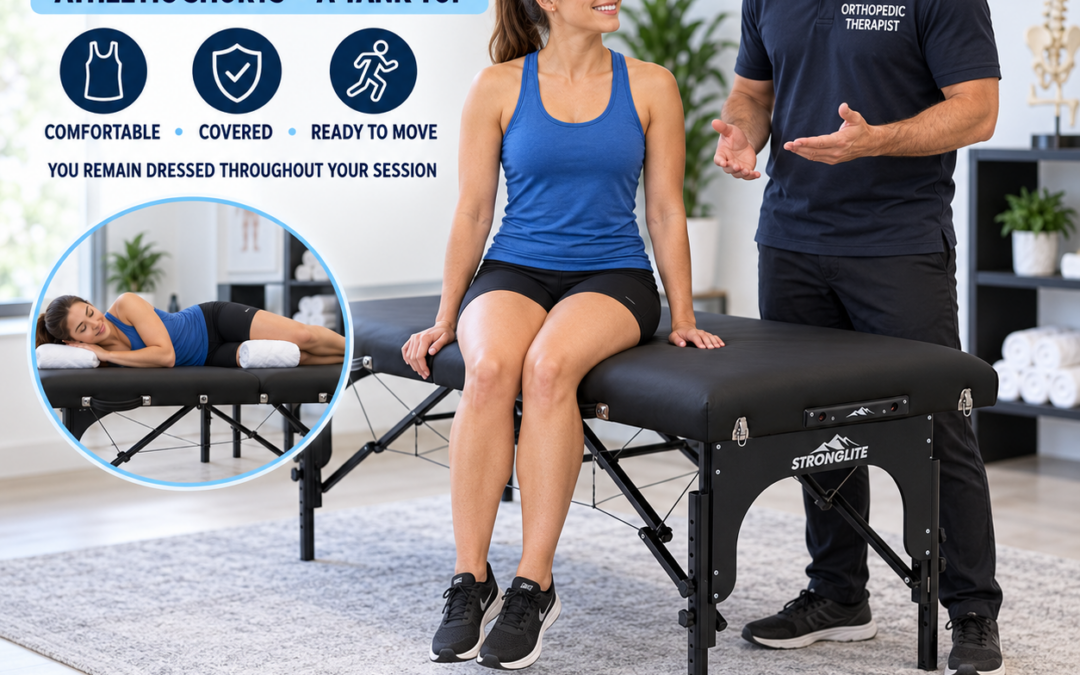
At Orthopedic Massage Therapy in Grapevine, Texas, clients remain comfortably dressed in athletic shorts and a tank top throughout the session. This clothing helps clients feel covered and secure while allowing me to evaluate movement and reposition the body when needed.
Orthopedic massage therapy may include treatment in face-down, face-up, side-lying, or seated positions. Comfortable, flexible clothing makes it easier to move between these positions without unnecessary exposure, complicated draping, or restrictive fabric.
The objective is simple: you should feel comfortable, respected, and properly covered throughout your treatment.
Recommended Clothing for Your Appointment
I recommend wearing or bringing:
- Comfortable athletic shorts
- A flexible tank top
- Appropriate undergarments
- Clean clothing that allows easy movement
The clothing should fit securely without feeling tight or restrictive.
Athletic shorts should allow the hips and legs to bend comfortably. A tank top should permit natural movement through the shoulders and arms while keeping the chest and torso covered.
Clients can bring these items and change before the session if they prefer not to wear them while traveling to the appointment.
Why Clients Remain Dressed
Remaining dressed can help many clients feel safer and more comfortable during hands-on treatment.
People have different experiences, boundaries, cultural expectations, and comfort levels. Some may feel anxious about undressing, while others may be concerned about being repositioned beneath a sheet.
Wearing shorts and a tank top removes much of this uncertainty. The client knows they will remain covered when lying face-down, face-up, side-lying, or seated.
This can make it easier to focus on the treatment rather than worrying about exposure or whether a sheet will remain in place.
Comfort is important because a person who feels uncertain may unconsciously brace, hold their breath, or tighten their muscles. Clear expectations and appropriate clothing can help create a more relaxed treatment environment.
Orthopedic Massage Includes Movement
Orthopedic massage therapy is not always a completely passive experience.
Depending on the client’s needs, I may evaluate how an arm, shoulder, hip, leg, or spinal region moves. The client may be asked to bend a joint, rotate, reach, sit up, turn onto one side, or change positions.
Comfortable athletic clothing allows these movements to happen more naturally.
For example, restrictive jeans may limit hip movement. A stiff shirt may interfere with shoulder motion. Very loose clothing may bunch, shift, or make it difficult to observe how an area is moving.
A tank top and athletic shorts provide a practical balance. They preserve coverage while allowing movement through the shoulders, spine, hips, and legs.
Moving Between Treatment Positions
A session may involve several treatment positions.
Face-Down
Face-down positioning can provide access to the back of the body, including the:
- Neck and shoulders
- Thoracic spine
- Lower back
- Gluteal and hip regions
- Hamstrings and calves
Clients are supported on my black Stronglite Premier massage table with body-positioning cushions arranged according to their needs.
Shorts and a tank top help the client remain covered while the body is supported and the therapist works around the clothing when appropriate.
Face-Up
Face-up positioning may be used when addressing areas such as the:
- Neck
- Front of the shoulders
- Chest region
- Abdomen and core
- Iliacus and psoas
- Quadriceps
- Front of the hips
- Lower legs
The client remains dressed and covered. I explain the areas I intend to address and where my hands will be placed before treatment begins.
Side-Lying
Side-lying can provide useful access to the:
- Lateral hip
- Quadratus lumborum
- Lower ribs
- Thoracic spine
- Shoulder blade
- Neck and shoulder
Cushions support the head, arm, torso, pelvis, and legs.
Secure, comfortable clothing is especially important in this position because the hips and legs may be bent or supported at different angles. Athletic shorts and a tank top allow this movement while helping the client remain covered.
Seated
Seated treatment may be used when evaluating posture or movement of the neck, shoulders, spine, and arms.
Remaining dressed makes it easy to transition between lying and seated positions without stopping to rearrange draping.
Why Athletic Shorts Are Helpful
Athletic shorts allow greater freedom through the hips and legs than jeans, dress pants, or other restrictive clothing.
They may help during treatment involving the:
- Hips
- Pelvis
- Quadriceps
- Hamstrings
- Knees
- Lower back
- Upper legs
The shorts should be long enough to provide comfortable coverage and secure enough to remain in place as the client turns or moves.
Extremely short, very loose, or excessively baggy shorts may shift during treatment. Compression shorts worn alone may also feel too revealing for some clients.
Comfortable, mid-length athletic shorts are usually the most practical choice.
The goal is not a particular fashion or appearance. The goal is coverage, comfort, and freedom of movement.
Why a Tank Top Is Helpful
A tank top allows movement and visibility around the neck, shoulders, shoulder blades, and upper back while keeping the torso covered.
This may help when evaluating:
- Shoulder mobility
- Scapular movement
- Neck and upper-back tension
- Thoracic rotation
- Arm movement
- Postural compensation
A flexible tank top can move with the body as the client reaches, rotates, or changes positions.
The top should provide enough coverage that the client feels secure. It should not be so tight that it restricts breathing or shoulder movement.
Clients should choose a style in which they feel comfortable lying, sitting, bending, and turning.
Clothing Helps Me Observe Movement
Orthopedic massage therapy includes more than working on individual muscles. I also consider how the body moves as a connected system.
Appropriate clothing can make it easier to observe relationships between the:
- Neck and shoulders
- Thoracic spine and ribs
- Lower back and pelvis
- Hips and legs
- Core and breathing patterns
For example, I may observe how the shoulder blade moves when the arm is raised or how the pelvis responds when the hip is repositioned.
This does not require the client to be undressed. Athletic clothing often provides enough access and movement visibility while preserving comfort and coverage.
Treatment Can Be Performed Through Clothing
Many orthopedic and myofascial techniques can be performed through clothing.
Depending on the technique and area, I may apply pressure, hold tissue, guide movement, or assess restrictions without needing direct skin contact.
Working through clothing does not mean the treatment is less focused or effective. The treatment approach is selected according to the client’s needs, the tissue being addressed, and the goal of the session.
If direct skin contact is recommended for a specific area, I explain why before proceeding. The client’s permission is always required, and their coverage and boundaries remain priorities.
Clothing Should Not Create New Restrictions
Some clothing can make movement or treatment more difficult.
Try to avoid:
- Jeans
- Belts
- Dresses or skirts
- Clothing with large zippers or metal decorations
- Thick sweatshirts
- Bulky pockets
- Restrictive shapewear
- Clothing that feels uncomfortable when lying down
- Fabric that does not stretch with movement
These items may create pressure against the body or interfere with positioning.
Soft, flexible athletic clothing is generally the best choice.
Coverage and Professional Boundaries
Clients should know what to expect before treatment begins.
I explain the areas I recommend treating, the positions we may use, and where I intend to place my hands. I continue checking with the client throughout the session.
Remaining dressed does not replace the need for communication, consent, and professional boundaries. Those principles apply during every treatment.
The client can:
- Ask questions before or during treatment
- Decline work in any area
- Request a different position
- Ask for an additional covering
- Request an adjustment to the supports
- Stop treatment at any time
A client should never feel pressured to accept a technique or position that makes them uncomfortable.
Proper Clothing Helps With Body Support
The body-support cushions on my Stronglite Premier massage table are arranged to help support the face, chest, pelvis, arms, and legs.
Athletic clothing works well with this system because it allows the body to settle onto the supports without stiff seams, buttons, belts, or zippers creating pressure.
When moving into side-lying, shorts allow the hips and knees to bend comfortably. A tank top allows the upper arm and shoulder to be positioned without pulling against restrictive sleeves.
Clothing and positioning work together to help the client feel stable and covered.
What If You Forget to Bring the Recommended Clothing?
If you arrive in work clothes or another outfit that does not allow comfortable movement, let me know.
The treatment may be adjusted based on what you are wearing and which movements can be performed comfortably. We can also discuss the best clothing to bring for a future session.
You should never feel embarrassed about asking questions. Knowing what to wear is part of preparing for treatment, and clear information can make the first appointment feel more comfortable.
Comfort Helps Build Trust
Trust is essential during any hands-on treatment.
Clients are more likely to communicate honestly when they understand what will happen and feel that their comfort is respected.
Wearing shorts and a tank top gives clients predictable coverage throughout the session. It also allows me to use different treatment positions without creating unnecessary concern about exposure.
The goal is not only to provide physical support. It is also to create a professional environment where clients feel heard, informed, and in control.
What to Wear to Orthopedic Massage Therapy in Grapevine, Texas
For your orthopedic massage appointment, please wear or bring comfortable athletic shorts and a tank top.
This clothing allows:
- Comfortable movement
- Easy position changes
- Appropriate body coverage
- Access to relevant treatment areas
- Observation of movement patterns
- Better use of support cushions
- Greater confidence during treatment
You will remain dressed throughout the session. Your comfort, coverage, boundaries, and consent are important at every stage of treatment.
At Orthopedic Massage Therapy in Grapevine, Texas, every session is adapted to the individual. The goal is to help you feel supported while addressing the muscular and fascial restrictions that may be influencing your movement.
Comfortable. Covered. Supported.
Improving Strength, Power and Flexibility
Text: 817-305-6548
Website: OmassageT.com
Location: 110 Barton St #6
Grapevine, Texas
76051