Why Orthopedic Massage Therapy Is Not a One-Size-Fits-All Treatment
Two people can arrive with pain in the same area and need very different treatment.
One person’s lower-back discomfort may be influenced by restricted hips. Another may be compensating for an old ankle injury. A third may have tightness involving the lower thoracic spine, ribs, diaphragm, core, or pelvis.
The location of pain is important, but it does not always reveal the entire pattern.
That is why orthopedic massage therapy should not be a routine performed exactly the same way for every client. Treatment should reflect the individual’s history, movement, comfort, current condition, and goals.
At Orthopedic Massage Therapy in Grapevine, Texas, each session begins with listening and assessment. The treatment plan develops from what we learn together.
The Same Symptom Can Have Different Contributing Factors
Consider two clients who both report right shoulder pain.
The first client may have restricted movement through the shoulder blade and thoracic spine after spending long hours working at a computer.
The second may be an athlete whose shoulder is compensating for limited torso rotation and an imbalance through the pelvis.
A third may have protective tension remaining after a previous injury or surgery.
Although all three clients feel discomfort in the shoulder, treating them with the same sequence of techniques may overlook what makes each situation different.
Pain can be influenced by many factors, including:
-
Previous injuries
-
Surgery
-
Repetitive activity
-
Athletic training
-
Work demands
-
Sitting and standing habits
-
Sleeping positions
-
Stress
-
Breathing patterns
-
Strength and mobility
-
Compensation elsewhere in the body
The purpose of an individualized approach is not to search for one hidden cause. It is to consider the relevant factors and determine where treatment may be helpful.
Listening Comes Before Treatment
Before beginning hands-on work, I ask questions about the client’s symptoms and history.
I may ask:
-
Where do you feel discomfort?
-
When did it begin?
-
Was there an injury or specific event?
-
What movements make it better or worse?
-
Have you had previous injuries or surgeries?
-
How do you normally sit, stand, work, or sleep?
-
What activities or sports do you participate in?
-
Have you noticed changes in balance or movement?
-
What would you like to be able to do more comfortably?
The answers help create context.
A person’s current pain may be connected to an experience from years earlier. An old hip, quadriceps, knee, or ankle injury may have changed how the person walks. A past abdominal surgery may have influenced posture and breathing.
Listening helps ensure that treatment is based on the person—not merely the symptom.
Movement Assessment Helps Guide the Plan
After discussing the client’s history, I may observe selected movements.
Depending on the concern, I may ask the client to:
-
Stand comfortably
-
Walk
-
Shift weight
-
Bend
-
Rotate
-
Raise an arm
-
Turn the head
-
Lift a knee
-
Move a hip or shoulder
-
Sit down and stand again
Movement assessment may reveal that one side moves differently or that another region compensates.
For example, a client with neck pain may raise an arm by elevating the shoulder and arching the lower back. This could suggest that the thoracic spine, ribs, or core should also be considered.
The assessment is not a test the client must pass. It is a way of gathering information and identifying which movements are relevant to treatment.
The Painful Area May Not Be the Only Area Treated
Direct work on the painful area may be helpful, but it may not be enough.
The body functions as a connected system. Treatment may include areas above, below, or away from the symptom when those regions appear to influence the pattern.
A session for lower-back discomfort might include work around the:
-
Hips
-
Pelvis
-
Iliacus and psoas
-
Quadratus lumborum
-
Core and abdomen
-
Lower thoracic spine
-
Ribs
-
Surrounding fascia
A session for neck or shoulder discomfort might also involve the:
-
Shoulder blades
-
Thoracic spine
-
Rib cage
-
Diaphragm region
-
Core
-
Pelvis
-
Hips
This does not mean every client needs treatment in every area. The plan is based on what appears relevant to that individual.
Positioning Should Be Individualized
Not everyone is comfortable lying face-down for an entire session.
Clients may be treated:
-
Face-down
-
Face-up
-
Side-lying
-
Seated
The position depends on the treatment area, the client’s mobility, medical history, breathing comfort, and personal preference.
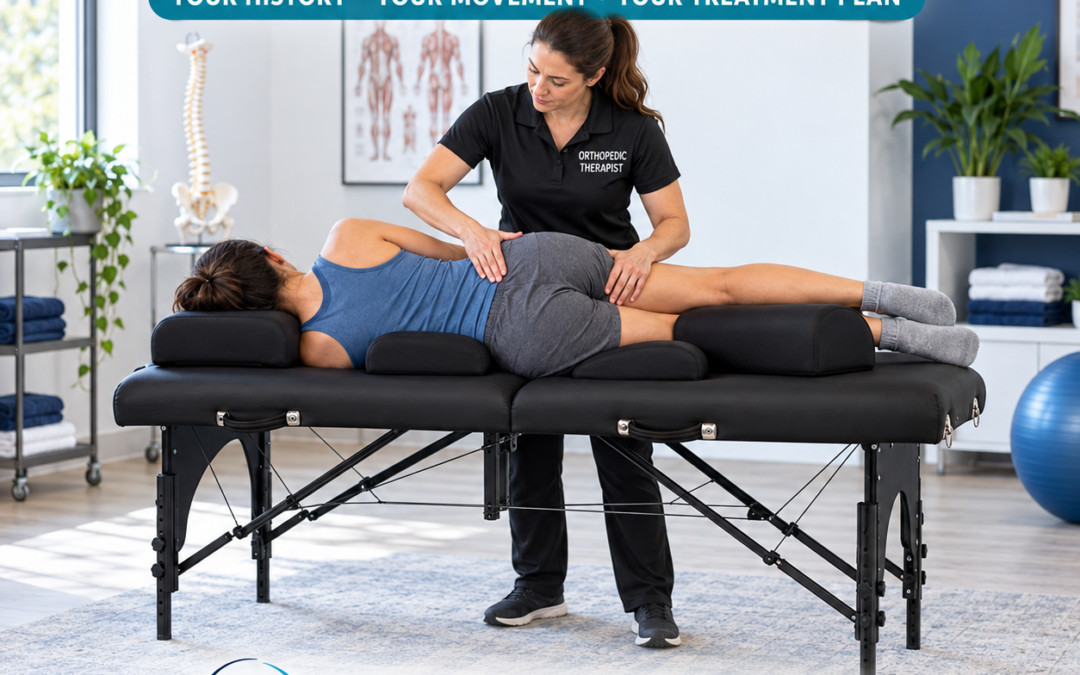
Someone with shoulder discomfort may benefit from side-lying because it allows the shoulder blade to move more freely. A client recovering after surgery may need to avoid pressure on a sensitive region. Another person may feel more comfortable seated or face-up.
I use a black Stronglite Premier massage table with a separate body-support positioning system. The face, chest, pelvis, arms, and legs can be supported based on the client’s needs.
Proper support can reduce the amount of muscular effort needed to remain comfortable on the table.
Clothing Is Part of the Treatment Plan
Clients remain dressed in athletic shorts and a tank top throughout the session.
This clothing helps clients feel comfortable and covered while allowing movement assessment, hands-on treatment, and position changes.
A client may move between standing, seated, face-down, face-up, and side-lying positions. Flexible athletic clothing makes these transitions easier.
Shorts and a tank top also allow the shoulders, spine, hips, and legs to move without being restricted by jeans, belts, thick seams, or stiff fabric.
Clients should choose clothing in which they feel comfortable bending, turning, lying down, and moving.
Pressure Is Not the Same for Everyone
Some people believe that effective massage must be extremely deep or painful. That is not how I approach orthopedic massage therapy.
The appropriate amount of pressure depends on:
-
The tissue being addressed
-
The treatment goal
-
The client’s comfort
-
Current sensitivity
-
Injury or surgical history
-
The technique being used
-
How the body responds
More pressure is not automatically more effective.
If the body feels threatened or overwhelmed, muscles may tighten to protect the area. Treatment should encourage a useful response rather than force the tissues.
I continue checking with the client about comfort and pressure throughout the session.
Different Techniques Serve Different Purposes
An individualized session may include a combination of techniques based on the client’s needs.
These may involve:
-
Orthopedic massage techniques
-
Myofascial release
-
Focused compression
-
Gentle movement
-
Positional work
-
Soft-tissue mobilization
-
Sports massage approaches
-
Work performed through clothing
A technique that helps one person may not be appropriate for another.
The technique is a tool. The treatment plan determines when and why that tool is used.
Consent Is Individualized Too
Each client has different boundaries and comfort levels.
Before working in areas such as the abdomen, ribs, pelvis, hips, chest, or upper thigh, I explain:
-
Why I recommend treating the area
-
How it may relate to the client’s symptoms
-
Where my hands will be placed
-
How the client will be positioned
-
What the client may expect to feel
The client can ask questions, decline treatment in any area, request a different position, or stop at any time.
Consent is not assumed simply because someone scheduled an appointment. It is an ongoing part of the session.
Athletes Have Different Needs
Even athletes participating in the same sport may require different treatment.
A quarterback, lineman, gymnast, runner, swimmer, or weightlifter places different demands on the body. Training schedules, competition timing, previous injuries, and recovery needs also vary.
One athlete may need help with hip mobility. Another may need stability and control rather than additional flexibility. A third may need treatment focused on recovery between competitions.
The treatment should also consider timing. A session before competition may have a different intensity and purpose from a recovery session after an event.
Surgical Recovery Requires Individual Planning
Clients preparing for or recovering from orthopedic surgery need treatment appropriate to their stage of healing.
Treatment may change based on:
-
The type of surgery
-
Medical restrictions
-
Healing time
-
Swelling
-
Scar sensitivity
-
Mobility
-
Pain levels
-
Recommendations from the medical team
Massage therapy does not replace surgical follow-up or physical rehabilitation.
After appropriate clearance, orthopedic massage may help address muscular and fascial restrictions associated with guarding and compensation. The plan must respect healing tissues and medical precautions.
Neurological Conditions Require Adaptation
Clients living with neurological conditions or recovering after a stroke may have changes in movement, balance, sensation, muscle tone, and fatigue.
The session may require:
-
Additional support
-
Slower position changes
-
Modified movement assessment
-
Shorter periods in one position
-
Careful communication
-
Coordination with healthcare professionals
The goal should reflect the individual’s abilities and needs.
For one person, progress may mean greater comfort. For another, it may involve easier movement, improved stability, or a more relaxed body.
Treatment Can Change During the Session
An individualized plan is not rigid.
The way the body responds may lead me to adjust the areas treated, pressure used, or client’s position.
For example, work around the hip may change how the lower back feels. Addressing the ribs may affect shoulder movement. Improving pelvic mobility may reveal a remaining restriction through the thoracic spine.
Reassessment helps guide these decisions.
The treatment can evolve as we gain more information.
Reassessment Shows How the Individual Responded
After treating an area, I may ask the client to repeat a movement from the beginning of the session.
We may reassess:
-
Walking
-
Rotation
-
Overhead reach
-
Hip movement
-
Shoulder movement
-
Bending
-
Balance
-
Weight transfer
The client may notice more ease, less pulling, better balance, or a different sense of stability.
If the movement does not change, that is also useful information. It may indicate that another area should be considered, the body needs more time, or the restriction may not be primarily related to soft tissue.
Reassessment helps keep the session responsive to the individual.
One Session May Not Address Every Layer
Long-standing movement patterns often develop over months or years.
A single session may create a meaningful change, but it may not address every restriction or compensation.
The body may need time to adapt. The client’s daily activities, sleep, work, training, and previous injuries continue to influence how they feel.
Follow-up care should be based on the client’s response and goals—not on a fixed schedule that applies to everyone.
Individualized Care Supports Honest Expectations
Orthopedic massage therapy cannot promise to diagnose or cure every source of pain.
Severe, unexplained, worsening, or concerning symptoms may require evaluation by an appropriate healthcare professional.
Individualized treatment means recognizing both what massage therapy may help and when another type of care is needed.
The goal is to provide thoughtful soft-tissue treatment while respecting the client’s health, boundaries, and larger care plan.
Orthopedic Massage Therapy in Grapevine, Texas
Your symptoms, history, movement, comfort, and goals are unique. Your orthopedic massage session should reflect that.
At Orthopedic Massage Therapy in Grapevine, Texas, treatment may include movement assessment, customized positioning, myofascial work, focused hands-on techniques, and reassessment.
Clients remain comfortably dressed in athletic shorts and a tank top. Treatment positions and body supports are adjusted to the individual.
There is no single routine that fits everyone.
One Body. One History. One Individualized Plan.
Improving Strength, Power and Flexibility
Address: 110 S Barton #6, Grapevine, Texas 76051
Text: 817-305-6548
Website: OmassageT.com