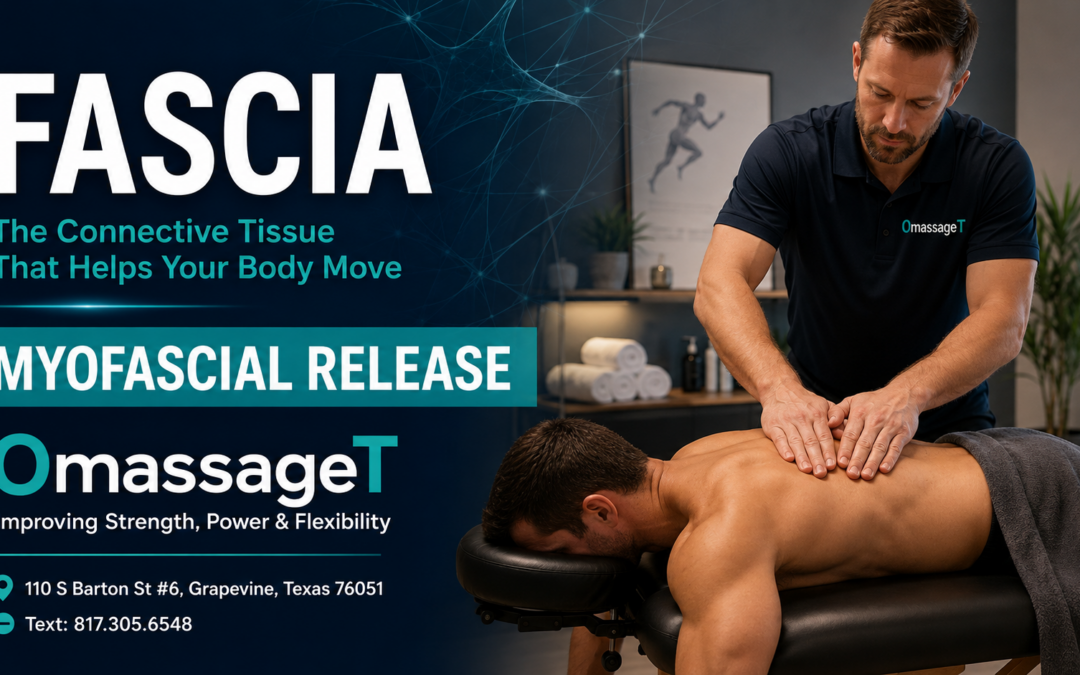
Why Your Orthopedic Massage Treatment Plan May Change From Session to Session
When you return for another orthopedic massage therapy session, the treatment may not be exactly the same as it was during your previous appointment. This is intentional.
Your body is not static. Pain, movement, muscle tension, activity, stress, sleep, recovery, and daily habits can change from one day to the next. A treatment plan that helped during one session may need to be adjusted as your body responds and your movement improves.
At Orthopedic Massage Therapy in Grapevine, Texas, each appointment begins with a simple but important question: What does your body need today?
Your Symptoms Can Change
You may initially schedule an appointment because of lower-back pain. After the first session, your back may feel more comfortable, but you might become more aware of restriction in a hip, thigh, or lower thoracic area.
This does not necessarily mean that treatment created a new problem. Sometimes the most uncomfortable area demands so much attention that smaller restrictions are harder to recognize. As the primary discomfort decreases, you may notice other areas that were already contributing to the way you moved.
Pain can also naturally vary. Research involving people with musculoskeletal pain has documented that symptoms may fluctuate from day to day.
That is one reason a treatment plan should remain flexible instead of following the same routine at every appointment.
Progress Changes What Needs Attention
Imagine that a client begins with limited hip rotation and lower-back tightness. During the first session, treatment may focus on improving comfort around the pelvis, hips, thighs, and lumbar region.
When the client returns, hip movement may be easier. However, the therapist may now notice that the rib cage and lower thoracic spine are not rotating well with the pelvis. The next session may include more work involving the diaphragm, abdominal wall, quadratus lumborum, iliacus, psoas, or surrounding thoracic structures.
Treatment has not moved away from the original goal. It has progressed to the next part of the pattern.
The same idea can apply to neck and shoulder discomfort. Improving movement around the pelvis, core, diaphragm, or thoracic spine may change how the upper body is supported. As those areas respond, the neck and shoulder treatment can become more specific.
The Body Works as a Connected System
Muscles, fascia, joints, nerves, breathing, balance, and movement all work together. When one region becomes restricted, the body may find another way to complete the movement.
This ability to compensate is useful. It allows us to continue walking, working, exercising, and participating in daily life. However, compensation can eventually place more demand on other areas.
For example:
-
An old ankle injury may influence the knee and hip.
-
A previous quadriceps injury may change how the pelvis and lower back manage movement.
-
Limited hip extension may cause the lumbar spine to do more work.
-
Restricted thoracic rotation may increase demand on the neck or shoulders.
-
Guarding after surgery may affect posture, breathing, balance, and movement.
-
Pelvic or core dysfunction may contribute to tension higher in the body.
These connections are possibilities to assess, not automatic conclusions. Every client is different, which is why observation and reassessment are essential.
Your Activities Between Sessions Matter
What you do between appointments may change what your body needs.
You may have:
-
Increased your exercise intensity
-
Returned to running or weight training
-
Spent several hours driving
-
Worked longer at a desk
-
Slept in a different position
-
Traveled by airplane
-
Started physical therapy
-
Participated in a competition
-
Lifted something heavy
-
Experienced a fall or new injury
-
Had a stressful week
-
Rested more than usual
Even positive changes can temporarily affect the body. Returning to exercise after time away may produce soreness or reveal areas that have not been moving efficiently. Increased strength or mobility can also change how force travels through the body.
Sharing these changes at the beginning of your session helps guide treatment.
Sleep, Stress, and Recovery Can Affect How You Feel
The way a person feels is not determined by muscles alone. Sleep, fatigue, stress, mood, nutrition, hydration, workload, and recovery may influence pain and physical comfort.
Research has examined a two-way relationship between sleep and musculoskeletal pain: poor sleep may be associated with greater pain, while pain may also interfere with sleep.
A client who arrives well rested may respond differently from someone who has slept poorly for several nights. A technique or pressure level that previously felt comfortable might feel too intense during a period of increased sensitivity or fatigue.
That does not mean progress has been lost. It means the session should reflect the condition of the person on that particular day.
Treatment Positioning May Change
Orthopedic massage therapy can be performed in several positions. Depending on comfort, mobility, medical history, and the area being treated, a client may be positioned:
-
Face down
-
Face up
-
Side lying
-
Seated
-
In a supported or partially elevated position
I use a body-support system on my Stronglite Premier portable massage table to help support the head, chest, pelvis, and legs. These cushions can be adjusted to reduce pressure and make different treatment positions more comfortable.
Clients wear athletic shorts and a tank top so they can remain comfortably covered while moving safely between positions.
Someone who was comfortable face down during one appointment may need side-lying treatment during the next. A client recovering from surgery may require additional support or an entirely different setup. Positioning is part of the treatment plan and should change when the client’s needs change.
Pressure and Technique Should Also Change
A productive session is not measured by how much pressure a person can tolerate.
Deep pressure may be appropriate in one area but uncomfortable or unnecessary in another. A body that is guarded, inflamed, fatigued, or recovering from surgery may respond better to slower and more comfortable techniques.
Treatment may include orthopedic massage, myofascial release, gentle movement, positional support, or focused work involving specific muscular and fascial structures. The approach should be selected according to the client’s history, goals, comfort, and response.
More pressure is not always more effective. The right amount of pressure is the amount that supports the treatment goal without overwhelming the client.
Reassessment Helps Guide the Next Decision
A treatment plan should be based on information rather than assumption.
During a session, the therapist may reassess a movement after treating a particular area. The client may be asked to turn the head, raise an arm, rotate the torso, bend, stand, or walk again.
The therapist and client can then consider:
-
Does the movement feel easier?
-
Has the range of motion changed?
-
Is the discomfort less intense?
-
Has the sensation moved?
-
Does the body feel more balanced or stable?
-
Is another restriction now more noticeable?
-
Should treatment continue in the same area or change direction?
Research on conservative care for musculoskeletal symptoms supports using a person’s response and changes in movement to inform ongoing clinical reasoning.
Reassessment does not guarantee that every movement will improve immediately. It provides information that helps determine the next appropriate step.
A Difficult Day Does Not Always Mean You Are Going Backward
Recovery is rarely a perfectly straight line.
You may experience several good days followed by a day of increased tightness or discomfort. This can happen after greater activity, poor sleep, travel, stress, exercise, or returning to a movement your body has avoided.
One difficult day does not automatically erase previous progress. It is more helpful to look for patterns over time:
-
Are you moving more comfortably overall?
-
Can you perform activities that were previously difficult?
-
Are painful episodes becoming less frequent?
-
Do symptoms resolve more quickly?
-
Are your balance and stability improving?
-
Do you feel more confident using the affected area?
Long-term progress is often clearer when function and movement are considered along with pain intensity.
Massage Is One Part of a Larger Plan
Orthopedic massage therapy can be one component of a broader approach that may include medical care, physical therapy, appropriate exercise, strength training, mobility work, rest, and changes to daily habits.
Evidence for massage varies depending on the condition. It may provide helpful short-term changes for some people, but it should not be presented as a cure or a replacement for necessary healthcare. NCCIH notes that chronic-pain treatment often requires an individualized approach involving different types of care.
New or severe symptoms, unexplained weakness, numbness, fever, suspected injury, changes in bowel or bladder control, chest pain, or difficulty breathing should be medically evaluated.
Individualized Treatment Means Remaining Flexible
Changing the treatment plan does not mean the previous session failed. It often means the body has responded and provided new information.
Each appointment should consider:
-
Your current symptoms
-
Your history
-
Your recent activities
-
Your movement
-
Your comfort
-
Your response to previous treatment
-
Your goals for daily life, exercise, recovery, or performance
Your body may need a different position, pressure level, technique, or treatment focus from one session to the next. That flexibility is an important part of individualized orthopedic massage therapy.
Orthopedic Massage Therapy in Grapevine, Texas
At Orthopedic Massage Therapy, treatment is guided by assessment, communication, comfortable positioning, and reassessment—not a predetermined routine.
The goal is to help you move with greater comfort, balance, stability,
Strength, Power, and Flexibility
while respecting your body’s needs throughout the process.
Orthopedic Massage Therapy
110 S Barton #6
Grapevine, Texas 76051
Text: 817-305-6548
Website: OmassageT.com
This article is for general educational purposes and is not a diagnosis or substitute for medical care.