Listening, Respect, and Professional Responsibility in Orthopedic Massage Therapy
When a client comes to see me, I understand that they are placing a great deal of trust in my hands.
They may be experiencing pain, recovering from an orthopedic surgery, returning to a sport, or trying to understand why their body does not move the way it once did. Some clients have already worked with doctors, physical therapists, chiropractors, nurses, athletic trainers, or other professionals.
My responsibility is to listen carefully, provide respectful and comfortable massage therapy, and remain within the professional boundaries of my license.
I often tell clients directly: I am not a doctor, and I do not diagnose medical conditions.
Being honest about my role does not diminish the value of orthopedic massage therapy. It strengthens it. When every professional respects their training, license, and responsibilities, the client can receive safer and more coordinated care.
Listening Comes First
Before I begin treatment, I listen.
I want to understand why the client scheduled the appointment, what they are feeling, and what they hope to improve. I may ask about:
-
Current pain or restriction
-
Previous injuries
-
Orthopedic surgeries
-
Exercise and athletic activity
-
Physical therapy or rehabilitation
-
Medications that may affect treatment
-
Swelling or visible physical changes
-
Sleep and recovery
-
Positions that feel uncomfortable
-
Movements that are difficult
-
Goals for treatment
Listening helps me understand the person, not just the painful area.
Two clients can arrive with the same complaint but have completely different histories. One person’s lower-back pain may have developed after long periods of sitting. Another may be recovering from hip surgery. Someone else may have changed the way they walk following an ankle or knee injury.
I cannot assume that the same treatment will be appropriate for each person.
Clients Deserve to Feel Heard
People living with pain sometimes feel as though their experiences have been dismissed or misunderstood. They may have difficulty explaining what they feel, especially when symptoms change or do not follow a simple pattern.
My job is not to argue with what a client feels.
If a client says a position is uncomfortable, I listen. If the pressure is too intense, I adjust it. If an area feels sensitive or unsafe, we stop and discuss it.
The client’s experience is important information.
Listening may involve paying attention to more than words. I also observe breathing, facial expressions, muscle guarding, movement, balance, and whether the client begins to tense during treatment.
A client should never feel pressured to remain silent or tolerate painful work.
Respecting My License Protects the Client
Massage therapy is a licensed profession in Texas. The Texas Department of Licensing and Regulation defines massage therapy as manipulation of soft tissue by hand or with certain mechanical or electrical equipment, and a state license is required to advertise or practice it.
My license allows me to practice massage therapy. It does not make me a medical doctor, physical therapist, chiropractor, or another type of healthcare professional.
Texas guidance also states that a massage therapist offering specialized techniques must have sufficient education and training and may not claim to diagnose or treat an illness or disease or perform activities protected under another profession’s scope.
I take that responsibility seriously.
I can observe how a person stands, walks, breathes, and moves. I can notice muscle tension, restriction, guarding, or visible differences. I can ask questions and use the information provided to guide an individualized massage session.
I cannot tell a client that I have diagnosed the medical cause of pain, swelling, weakness, numbness, or another symptom.
Observation Is Not Diagnosis
During an assessment, I may notice that one ankle looks more swollen than the other. I may see puffiness around the clavicle, with one side appearing different from the other. I may observe that one shoulder rests higher, a hip does not rotate as freely, or the client shifts weight toward one side.
These observations can help guide questions and determine whether massage is appropriate. They are not medical diagnoses.
There is an important difference between saying:
“I notice that your left ankle appears more swollen than your right ankle.”
and saying:
“I know what medical condition is causing that swelling.”
The first statement is a professional observation. The second requires medical evaluation and diagnosis.
When a symptom falls outside my role—or when something does not feel appropriate for massage—I encourage the client to speak with a qualified healthcare professional.
Knowing When to Refer Is Part of Professional Care
Referring a client does not mean that massage therapy has failed. It means that I respect the client’s safety and the responsibilities of other professionals.
A referral may be appropriate when a client reports or displays:
-
New or severe pain
-
Unexplained one-sided swelling
-
Redness, warmth, or significant tenderness
-
Sudden weakness or loss of coordination
-
New or progressing numbness
-
Fever or signs of infection
-
A suspected fracture or acute injury
-
Chest pain or difficulty breathing
-
Changes in bowel or bladder control
-
Symptoms that are worsening without explanation
-
A condition that has not been medically evaluated
I do not want massage therapy to delay necessary medical care.
A doctor may need to order imaging, laboratory work, medication, or another diagnostic test. A physical therapist may provide a rehabilitation program involving therapeutic exercise and functional retraining. A chiropractor has a different professional scope and training. Nurses, athletic trainers, occupational therapists, and other professionals also contribute distinct knowledge and services.
Respecting those roles supports the client.
I Do Not Compete With Other Professionals
Healthcare and recovery should not be treated as a competition.
My goal is not to convince a client that orthopedic massage therapy should replace every other type of care. Instead, massage may become one supportive part of a larger plan.
Depending on the person, that plan may include:
-
Medical evaluation
-
Physical therapy
-
Chiropractic care
-
Occupational therapy
-
Athletic training
-
Appropriate exercise
-
Strength and conditioning
-
Medication
-
Surgery
-
Rest and recovery
-
Orthopedic massage therapy
Different professionals may view the body from different perspectives. Those perspectives do not always have to be identical to be valuable.
I respect the education and license of every professional involved in the client’s care. I also expect my role as a licensed massage therapist to be understood and respected.
Communication Helps Coordinate Care
When a client is working with another professional, I may ask what instructions or restrictions they have received.
For example:
-
Has the surgeon cleared the area for massage?
-
Are there positions that should be avoided?
-
Has the physical therapist provided movement restrictions?
-
Is the client taking blood-thinning medication?
-
Is there a current diagnosis that affects treatment?
-
Has swelling already been medically evaluated?
-
Is there an incision that is still healing?
-
Are there exercises the client has been asked to perform?
I do not change another professional’s treatment plan. I use the information to make responsible decisions about massage therapy.
When appropriate and authorized by the client, communication between professionals can help everyone understand the treatment goals and limitations.
Respect Includes Consent and Boundaries
Professional respect also means protecting the client’s comfort, privacy, and control throughout the session.
Before treatment, I explain what I plan to do. When changing positions or working near a sensitive area, I communicate with the client.
The client may ask for:
-
More or less pressure
-
A different treatment position
-
Additional body support
-
An area to be avoided
-
An explanation of a technique
-
A pause
-
The treatment to stop
Consent continues throughout the entire appointment.
I have everyone wear athletic shorts and a tank top. This allows clients to remain comfortable and covered while moving between face-down, face-up, side-lying, seated, or supported positions.
Texas requires licensed massage therapists and establishments to follow professional regulations involving consultation documents, records, appropriate conduct, and client protection.
These responsibilities are not simply rules to follow. They are part of creating a safe and respectful environment.
Pain-Free Treatment Reflects Respect
I do not believe a client must suffer through painful treatment to receive a benefit.
If a technique causes the client to hold their breath, clench the jaw, tighten the body, or pull away, I want to know. Pressure and positioning can be adjusted.
Pain-free work makes it easier for many people to relax. When the body is not fighting against treatment, the client may breathe more naturally and communicate more clearly.
Comfort does not mean the work is unfocused. Orthopedic massage can remain specific while respecting the person’s limits.
The goal is not to demonstrate how much pressure I can apply. The goal is to help the client move toward continued improvement.
Honesty About Results Is Part of My Responsibility
I may observe meaningful changes between sessions.
An ankle may appear less swollen. Puffiness around the clavicle may look reduced. Movement may become easier, and the client may report feeling more balanced, relaxed, or open. Many clients tell me they sleep more deeply after treatment.
I can honestly describe what I observe and what clients report.
What I should not do is promise that every person will receive the same result or claim that massage has cured an underlying medical condition.
Texas enforcement guidance identifies false, misleading, deceptive, or exaggerated claims about massage services as an ethical and advertising violation.
Professional integrity means communicating the value of my work without overstating what it can do.
My Role as an Orthopedic Massage Therapist
My role is to:
-
Listen carefully
-
Observe the body
-
Ask appropriate questions
-
Provide comfortable massage therapy
-
Adjust positioning and pressure
-
Respect client consent
-
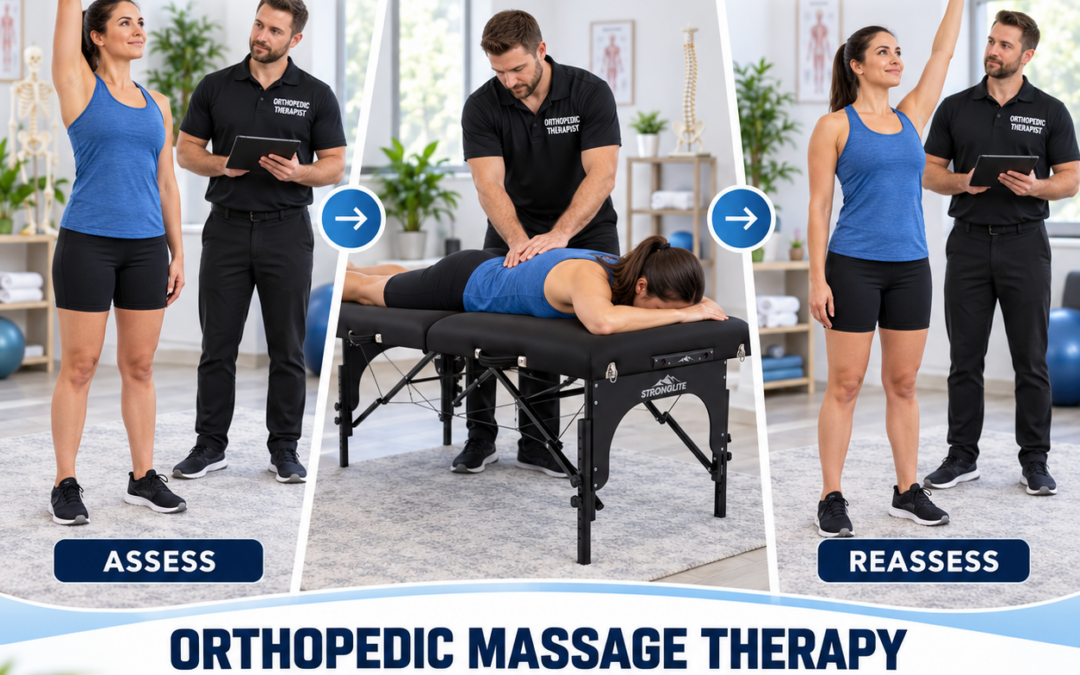
Reassess movement and response
-
Document continued improvements
-
Stay within my education and license
-
Refer to another professional when necessary
I am not a doctor, and I do not diagnose disease. I am a licensed massage therapist who practices orthopedic massage therapy with respect for my profession, my clients, and the other professionals involved in their care.
Professional Orthopedic Massage Therapy in Grapevine, Texas
At Orthopedic Massage Therapy, listening and respect are central parts of every appointment.
I respect what the client feels. I respect the limits of my license. I respect the knowledge and responsibilities of other licensed professionals. Most importantly, I respect the trust each person places in me.
That trust guides how I assess, communicate, position, treat, and reassess during every session.
Orthopedic Massage Therapy
110 S Barton #6
Grapevine, Texas 76051
Text: 817-305-6548
Website: OmassageT.com
This article is for general educational purposes. Orthopedic massage therapy does not diagnose or treat disease and is not a substitute for appropriate medical care.