Orthopedic Massage Therapy OmassageT.com
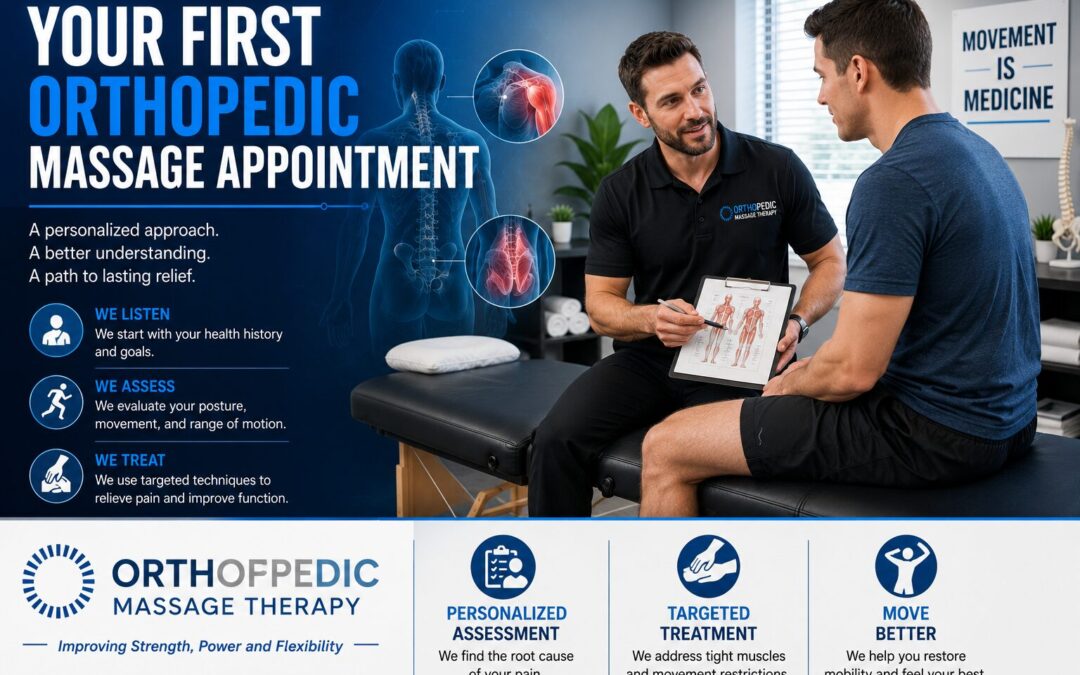
Scheduling your first orthopedic massage appointment can be exciting—but it’s also natural to have questions. If you’ve never experienced orthopedic massage therapy before, you may wonder what happens during the session, what to wear, whether it will hurt, or how it differs from a traditional massage.
Unlike a spa massage that focuses primarily on relaxation, orthopedic massage is designed to address pain, movement restrictions, and soft tissue dysfunction. Every session begins with understanding your body, your goals, and the underlying cause of your discomfort.
At Orthopedic Massage Therapy (OmassageT.com), we believe education is part of the healing process. Our goal is to help you feel comfortable, informed, and confident from the moment you walk through the door.
What Makes Orthopedic Massage Different?
Orthopedic massage combines clinical assessment with hands-on treatment. Rather than following the same routine for every client, your therapist evaluates how your muscles, joints, and connective tissues work together.
The purpose isn’t simply to help you relax—it’s to improve how your body moves and functions.
Whether you’re dealing with shoulder pain, lower back discomfort, sciatica, neck stiffness, or a sports injury, your treatment is customized specifically for you.
Step 1: Your Health History
Your appointment begins with a conversation.
Your therapist will ask about:
- Where you’re experiencing pain
- How long you’ve had your symptoms
- Previous injuries or surgeries
- Your daily activities
- Exercise habits
- Occupation
- Medical conditions that may affect treatment
- Your goals for therapy
The more information you provide, the better your therapist can tailor your treatment plan.
Step 2: Postural Assessment
Next, your therapist will observe how your body is aligned.
This may include looking at:
- Standing posture
- Shoulder position
- Pelvic alignment
- Head position
- Weight distribution
- Walking pattern
Sometimes the source of pain isn’t located where you feel it. For example, shoulder pain may be influenced by posture, while lower back pain may be related to tight hips or restricted movement.
Step 3: Movement Assessment
Before treatment begins, your therapist may ask you to perform simple movements.
These might include:
- Turning your head
- Raising your arms
- Bending forward
- Squatting
- Rotating your trunk
- Walking
These movements help identify restrictions that may be contributing to your symptoms.
Step 4: Range of Motion Testing
Your therapist may gently assess how well your joints move.
This helps determine:
- Muscle tightness
- Joint restrictions
- Pain with movement
- Mobility limitations
These findings guide your treatment plan.
Step 5: The Massage Treatment
Once the assessment is complete, you’ll get comfortable on the treatment table.
Depending on your condition, treatment may include:
Myofascial Release
Gentle sustained pressure to improve movement of connective tissue.
Trigger Point Therapy
Focused treatment for tight muscle knots that may refer pain into other areas.
Deep Tissue Techniques
Targeted work to reduce chronic muscle tension and improve mobility.
Assisted Stretching
Gentle stretching to restore flexibility and improve range of motion.
Sports Massage Techniques
If you’re physically active, your therapist may incorporate techniques that support athletic performance and recovery.
Will the Massage Hurt?
One of the biggest misconceptions about orthopedic massage is that it has to be painful to be effective.
While you may experience mild discomfort when tight muscles are being treated, your therapist will work within your comfort level.
Communication is encouraged throughout the session.
The goal is effective treatment—not unnecessary pain.
What Should You Wear?
Wear comfortable clothing that allows easy movement.
Athletic shorts and a T-shirt are often ideal.
Depending on the area being treated, you may be asked to change into clothing that provides appropriate access while maintaining your privacy and comfort. Professional draping is always used.
How Long Does the Appointment Last?
Most initial appointments last between 60 and 90 minutes, depending on your needs and the evaluation required.
This allows time for:
- Health history
- Assessment
- Hands-on treatment
- Home care recommendations
What Happens After Your Massage?
Many clients leave feeling:
- Looser
- More mobile
- Less tense
- More relaxed
It’s also common to experience mild soreness for a day or two, especially if you’ve had significant muscle tension for a long time.
This is similar to how muscles may feel after starting a new exercise program.
Home Care Recommendations
Your therapist may recommend:
- Stretching exercises
- Mobility drills
- Hydration
- Walking
- Ice or heat (when appropriate)
- Posture corrections
- Activity modifications
Following these recommendations often helps extend the benefits of your treatment.
How Many Sessions Will I Need?
Every person is different.
Some clients notice improvement after one visit.
Others with chronic pain or long-standing movement restrictions often benefit from a series of treatments.
Your therapist will discuss a treatment plan based on:
- Your symptoms
- Your goals
- Your activity level
- Your response to treatment
The goal is always to help you become less dependent on treatment over time by improving your body’s movement and function.
Steven’s Clinical Insight
“One of the most rewarding moments in my practice is when a new client realizes their pain isn’t something they simply have to live with. Often, the body is compensating for tight muscles, poor movement patterns, or an old injury. By taking the time to assess how everything works together, we can create a treatment plan that’s focused on improving function—not just chasing symptoms.”
Frequently Asked Questions
Do I need a doctor’s referral?
In most cases, no. Many people schedule orthopedic massage on their own. If you have a serious medical condition or recent injury, your healthcare provider may recommend massage as part of your overall care plan.
Should I eat before my appointment?
A light meal is fine. Avoid eating a large meal immediately before your session.
Is orthopedic massage only for injuries?
No. Many clients come to improve mobility, reduce muscle tension, enhance athletic performance, or prevent future problems.
Should I drink water after my massage?
Staying hydrated is a good habit after massage and supports your overall health. While hydration doesn’t “flush toxins,” it can help you feel your best after treatment.
Why Choose Orthopedic Massage Therapy?
At Orthopedic Massage Therapy, every appointment is centered around one question:
“What’s causing this problem?”
Rather than simply treating the painful area, we evaluate how your body moves as a whole.
Our goal is to help you:
- Reduce pain
- Improve flexibility
- Restore mobility
- Recover from injuries
- Move with greater confidence
Every treatment plan is personalized because every client is unique.
Schedule Your First Appointment Today
Taking the first step toward feeling better doesn’t have to be intimidating.
Whether you’re dealing with chronic pain, recovering from an injury, or simply looking to move more comfortably, we’re here to help.
Schedule your first appointment with Orthopedic Massage Therapy today and experience the difference that a personalized, movement-focused approach can make.
Health and Wellness is priceless, include orthopedic massage therapy in your wellness!
At Orthopedic Massage Therapy,
we are here to guide and Empower You for Optimal Results in Performance!
Orthopedic Massage Therapy
Improving Strength, Power and Flexibility
OmassageT.com
Schedule Massage by text 817-305-6548
110 S Barton St. #6
Grapevine, Texas 76051