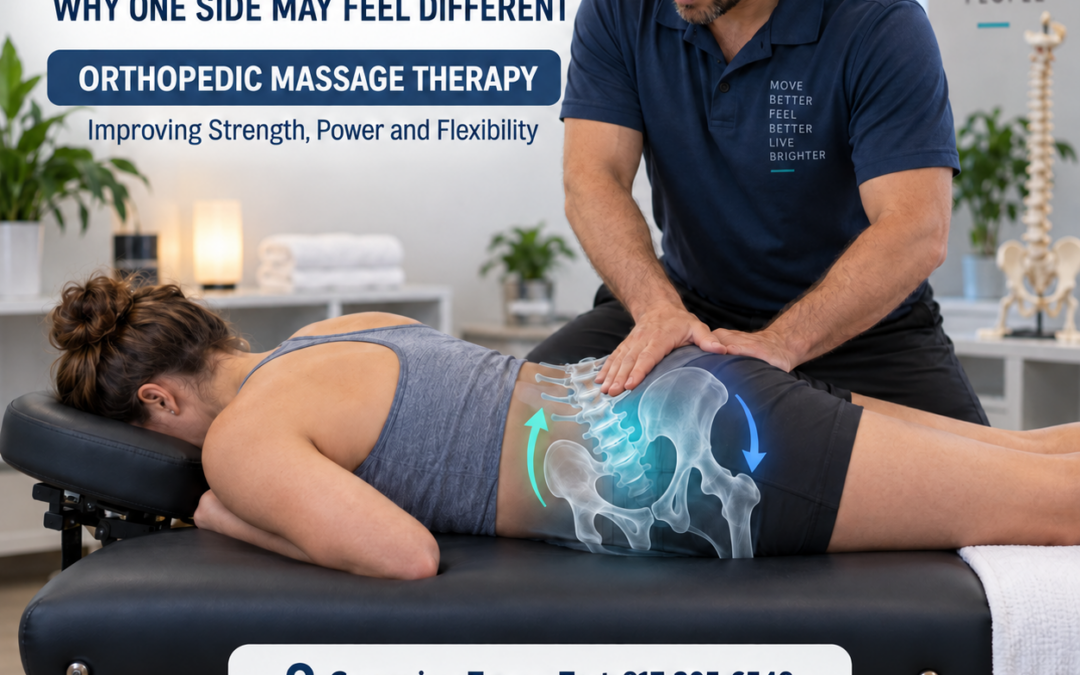
Pelvic Imbalance: Why One Side of Your Body May Feel Different
Have you ever felt as though one hip sits higher than the other, one leg moves more easily, or one side of your lower back stays tighter? Perhaps you regularly shift your weight to the same leg, notice unevenness while walking, or feel that one side of your body works harder during exercise.
These sensations may involve the way the hips, pelvis, core, and spine are working together. They may also reflect habits, previous injuries, muscular restrictions, or compensation patterns that have developed over time.
The human body is not perfectly symmetrical, and a small difference between sides does not automatically indicate a problem. However, when uneven movement is accompanied by pain, tightness, weakness, or reduced function, it may be helpful to look at the larger pattern.
At Orthopedic Massage Therapy in Grapevine, Texas, I evaluate how both sides of the body move and work together rather than treating only the area where discomfort is felt.
What Is Pelvic Imbalance?
The pelvis connects the spine to the legs and transfers force between the upper and lower body. It moves during walking, running, bending, rotating, sitting, and nearly every other daily activity.
The term “pelvic imbalance” can describe the feeling or appearance that the two sides of the pelvis are moving, resting, or carrying weight differently.
One side may feel tighter, higher, more rotated, or less stable. A person may consistently place more weight on one leg or notice that one hip has less mobility.
This does not necessarily mean that the pelvis is permanently “out of place.” The body is dynamic, and its position changes throughout the day. Muscular tension, joint movement, fatigue, pain, breathing, posture, and habitual activities can all influence how the pelvis is positioned and experienced.
The goal of orthopedic massage therapy is not to force the pelvis into a supposedly perfect position. It is to address restrictions and help the surrounding areas move and coordinate more comfortably.
Common Signs of an Uneven Movement Pattern
A person experiencing an imbalance through the pelvis and hips may notice:
-
Tightness on one side of the lower back
-
One hip that feels higher or more restricted
-
A tendency to stand on the same leg
-
Different stride lengths while walking or running
-
One foot turning outward more than the other
-
Uneven flexibility between the legs
-
Recurring tightness in one hamstring or quadriceps
-
Difficulty rotating in one direction
-
One side feeling stronger or more stable
-
Uneven wear on shoes
-
Discomfort after sitting or driving
-
A feeling that the body is twisted or shifted
These signs do not identify one specific cause. They are clues that can be considered alongside the client’s history, symptoms, and movement.
Sitting Habits Can Influence the Pelvis
Sitting is a normal activity and is not automatically harmful. The body is designed to tolerate many different positions.
However, spending long periods in the same position may contribute to stiffness and reduced movement variety. Sitting unevenly can also place different demands on each side of the pelvis.
A person may regularly:
-
Cross the same leg over the other
-
Sit on one foot
-
Lean toward one armrest
-
Keep a wallet or phone in a back pocket
-
Rotate toward a computer screen
-
Shift away from a painful hip
-
Drive with one leg in a different position
None of these habits alone guarantees pain. The concern is often repetition. If the same position is maintained for hours every day, the body may adapt to it.
Muscles and fascia on one side may become shortened or overworked. When the person stands, the pelvis and hips may need time to adjust to an upright position.
Regular movement breaks and greater variety in sitting positions may help reduce the amount of time the body spends loading the same tissues.
Standing on One Leg
Many people stand with most of their weight on one leg. It may feel more comfortable or stable, especially when waiting in line, talking, cooking, or working at a standing station.
This habit may also develop following an injury. Someone who previously hurt an ankle, knee, thigh, or hip may have learned to rely on the opposite leg. Even after the original injury improves, the weight-shifting pattern may remain.
Standing on the same leg repeatedly can affect how the hips, pelvis, and lower back share the workload. One side may become compressed while muscles on the other side work to maintain balance.
Over time, the person may notice tightness through one hip, one side of the lower back, or the muscles surrounding the pelvis.
How Sleeping Positions May Contribute
Sleeping positions can influence how the body feels because they are maintained for several hours.
A side sleeper may pull the top knee far forward, rotating the pelvis and lower back. Someone may sleep with one leg straight and the other sharply bent. A stomach sleeper may keep one hip turned outward, while a back sleeper may notice an increased arch through the lumbar spine.
There is no universal sleeping position that is perfect for everyone. The most appropriate position depends on the person’s comfort, health, mattress, pillows, and physical needs.
Still, sleep position is worth considering when symptoms are strongest upon waking or consistently affect the same side.
The goal is not to create fear about sleeping incorrectly. It is to identify whether a repeated position may be one of several factors contributing to the larger pattern.
Previous Injuries Can Leave Lasting Patterns
The body is very good at adapting. When an injury occurs, it may change movement to protect the painful area.
Someone with an injured left ankle may shorten the left stride and place more weight on the right leg. A past hip or upper-quadriceps injury may change how the pelvis rotates. Knee discomfort may cause a person to avoid bending one leg fully.
These changes can be helpful during recovery. They allow the person to continue moving while the injured area heals.
However, the compensation may remain after the original injury no longer hurts. The person may not realize they are still favoring one side.
Months or years later, discomfort may develop in a different area. The current lower-back or hip tightness may be influenced by an older injury elsewhere in the body.
This is why I ask about previous injuries, surgeries, sports, work demands, and other physical experiences. The history may help explain the current movement pattern.
Fascia and the Pelvis
Fascia is connective tissue that surrounds and links structures throughout the body. It helps transfer force and allows tissues to glide during movement.
When fascia becomes restricted, hardened, or bound, it may affect movement locally and in connected areas.
A fascial restriction through the thigh or hip can influence tension around the pelvis. Restrictions in the abdomen, lower back, or lower thoracic region may also affect how the pelvis moves and stabilizes.
Myofascial release may help reduce some of these restrictions and encourage better movement between the tissues.
Because fascia forms a continuous network, treatment may include areas above and below the pelvis—not just the side that feels uncomfortable.
The Relationship Between Mobility and Stability
Comfortable movement requires both mobility and stability.
The hips need enough mobility to walk, run, squat, bend, and rotate. The core and muscles surrounding the pelvis must also provide stability and control.
When hip mobility is limited, the lower back may attempt to produce additional movement. When stability is reduced, muscles may tighten to protect the area.
This protective tightness is important to understand. A muscle that feels tight does not always need aggressive stretching. It may be working harder because another area is not providing enough support.
Orthopedic massage therapy considers why a tissue may be tight rather than assuming tightness is the entire problem.
How Orthopedic Massage Therapy May Help
Treatment may include careful work around the:
-
Lower thoracic and lumbar spine
-
Abdominal and core muscles
-
Gluteal muscles
-
Hip flexors
-
Deep hip rotators
-
Quadriceps and hamstrings
-
Inner and outer thighs
-
Fascia surrounding the hips and pelvis
The areas treated and techniques used depend on the client’s history, symptoms, movement, and comfort.
Because the abdomen, pelvis, and hips can feel personal or sensitive, communication and consent are essential. I explain the treatment plan and intended hand placement before beginning. I continue checking with the client during the session, and treatment can be changed or stopped at any time.
Why the Painful Side May Not Be the Problem Side
The side that hurts may be working too hard to compensate for a restriction somewhere else.
For example, discomfort on the right side of the lower back may develop because the left hip is not moving well. The right side may be producing extra movement or stability to keep the person balanced.
This is one reason treating only the painful side may provide incomplete or temporary relief. Both sides should be considered, along with the core, spine, and legs.
The objective is not simply to make the painful area relax. It is to understand why that area has been under additional stress.
Helping the Body Return to Better Balance
Clients sometimes describe feeling taller, more open, balanced, stable, relaxed, or as though they are floating after treatment.
They have not physically become taller. Reduced muscular and fascial restriction may allow the body to return closer to its natural posture and actual height.
The goal is not perfect symmetry. Every person has natural differences between sides. The goal is better movement, improved function, and less unnecessary compensation.
Orthopedic Massage Therapy in Grapevine, Texas
If one side of your body feels tighter, higher, weaker, or less mobile, the pattern may involve more than the location where you feel discomfort.
Orthopedic massage therapy can help address restrictions through the hips, pelvis, core, spine, and surrounding fascia. Treatment is based on your individual history, movement patterns, comfort, and goals.
Improving Strength, Power and Flexibility
Text: 817-305-6548
Website: OmassageT.com
Location: 110 S Barton #6
Grapevine, Texas
76051