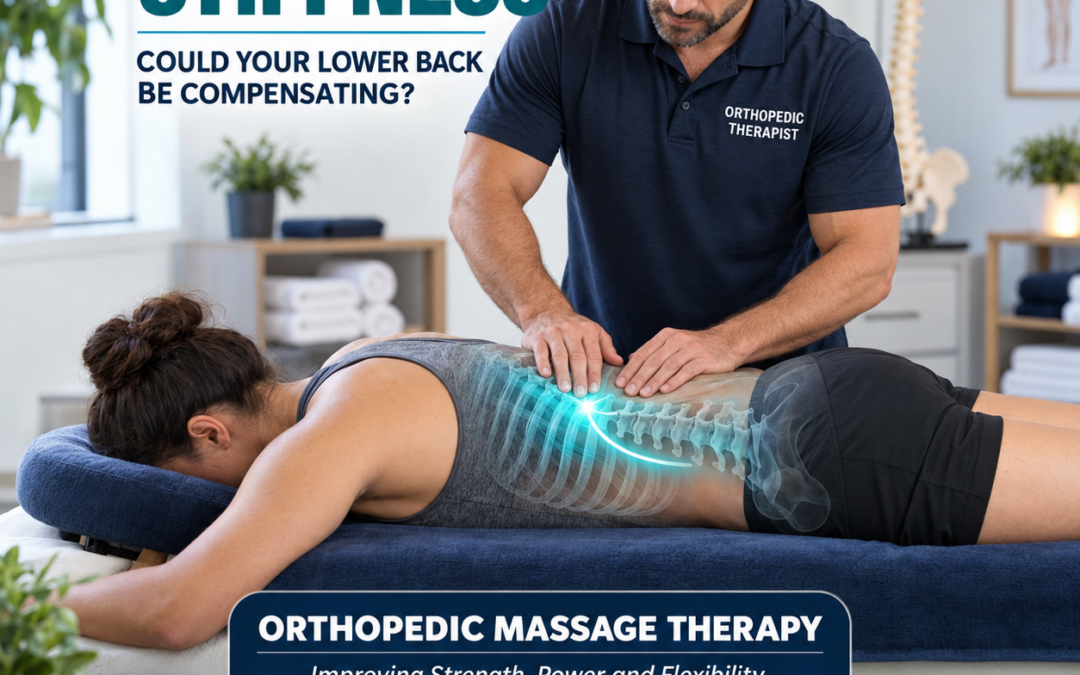
Could a Stiff Lower Thoracic Spine Be Contributing to Your Lower-Back Pain?
When someone experiences lower-back pain, attention usually goes directly to the lumbar spine. The painful muscles may feel tight, tired, or unable to relax. However, the lower back does not function independently.
Restricted movement in the lower thoracic spine—the area around the lower ribs and just above the lumbar region—may cause the lower back to compensate.
The lower thoracic spine helps the torso rotate, bend, breathe, and transfer movement between the upper body and pelvis. If this area is not moving well, the lumbar spine, hips, and pelvis may take on additional work.
At Orthopedic Massage Therapy in Grapevine, Texas, I look beyond the location of pain to understand how the spine, rib cage, core, pelvis, and hips are working together.
Where Is the Lower Thoracic Spine?
The thoracic spine is the middle section of the spine. It connects with the ribs and extends from the base of the neck to the upper portion of the lower back.
The lower thoracic spine is located near the bottom of the rib cage, where the thoracic spine meets the lumbar spine. This meeting point is sometimes called the thoracolumbar junction.
This area serves as an important transition between the more rotational thoracic region and the weight-bearing lumbar region.
The lower thoracic spine is involved when you:
- Rotate to look behind you
- Swing your arms while walking
- Reach across your body
- Bend or straighten the torso
- Breathe deeply
- Throw, swing, or change direction
- Transfer force between your upper and lower body
When movement through this region becomes restricted, the body may search for that movement somewhere else.
How the Lower Back Compensates
The lumbar spine is designed to support the body and allow bending, extension, and some side-to-side movement. It does not have the same rotational ability as the thoracic spine.
If the lower thoracic region cannot rotate comfortably, the lumbar spine may attempt to create more rotation. This may happen while walking, running, playing sports, lifting, or turning during everyday activities.
The lower back may also compensate if the lower ribs and thoracic spine do not extend well. A person may increase the arch in the lumbar spine to stand upright, reach overhead, or take a deeper breath.
These adaptations may be helpful in the short term because they allow the person to continue moving. Over time, however, the additional workload may contribute to fatigue, muscular tension, restricted movement, or discomfort in the lower back.
Why the Painful Area May Not Be the Restricted Area
Pain often attracts attention, but the most painful area is not always the area with the greatest movement restriction.
The lumbar muscles may feel tight because they are working harder to make up for limited movement above or below them. In this situation, the lower back may be the compensating area rather than the original source of the pattern.
For example, a person may have reduced rotation through the lower thoracic spine. When turning, the pelvis and lower back may rotate excessively to complete the movement. The individual feels pain in the lumbar area, but the restriction may involve the lower ribs and thoracic tissues.
Treating only the painful lower-back muscles may provide temporary relief. If the thoracic restriction remains, the lumbar region may continue performing the additional work.
The Connection to the Rib Cage and Breathing
The thoracic spine and rib cage work together. Every breath requires movement through the ribs, diaphragm, abdomen, and surrounding tissues.
The diaphragm is a large breathing muscle located beneath the lungs. It forms a dome between the chest and abdominal regions and works closely with the core and pelvic structures.
When a person breathes, the ribs should move in several directions. The abdomen and pelvic floor also respond to changes in pressure.
Stress, prolonged sitting, pain, surgery, injury, or habitual posture may change breathing patterns. Someone may begin taking smaller breaths into the upper chest while creating less movement through the lower ribs.
If the tissues around the lower ribs and diaphragm are restricted, movement through the lower thoracic spine may also become limited. The muscles of the lower back may then work harder during breathing, posture, and movement.
Orthopedic massage therapy may address muscular and fascial restrictions around the lower thoracic spine, rib cage, abdomen, and back. It does not treat breathing or internal medical conditions, but it may help improve the mobility of the tissues involved in comfortable movement.
Sitting and Lower Thoracic Stiffness
Many people spend much of the day sitting at a desk, driving, or looking at electronic devices.
Sitting is not automatically harmful, and there is no single perfect posture. However, remaining in the same position for long periods can reduce movement variety.
Someone may sit with the torso rounded, rotate toward one screen, lean on the same armrest, or shift toward one hip. Over time, the body may become accustomed to these positions.
When the person stands or attempts to rotate in the opposite direction, the lower thoracic spine and rib cage may feel stiff. The lower back or pelvis may compensate to create the missing movement.
Frequent changes in position and regular movement throughout the day may be more helpful than attempting to hold one rigid “perfect” posture for hours.
Standing and Reaching Patterns
Lower thoracic restrictions may become noticeable while standing or reaching overhead.
If the thoracic spine does not extend comfortably, a person may push the abdomen forward and arch the lower back to lift the arms. The movement appears to come from the shoulders, but the lumbar spine may be providing much of the extension.
This pattern may occur during:
- Reaching into an overhead cabinet
- Lifting weights above the head
- Serving a tennis ball
- Throwing a football or baseball
- Performing gymnastics
- Swimming
- Painting or completing overhead work
The person may believe they have a shoulder or lower-back problem when restricted movement through the thoracic spine and rib cage is contributing to the pattern.
Previous Injuries and Surgery
Previous injuries may influence movement through the lower thoracic spine long after the original symptoms have improved.
An injury involving the ribs, shoulder, spine, abdomen, hip, or pelvis may cause the body to guard and limit movement. Surgery may also temporarily change posture, breathing, and the way a person walks or transfers weight.
Following appropriate healing and medical clearance, the protective pattern may remain. Fascia and muscles may feel restricted, and the person may continue moving as though the injured area still needs protection.
Orthopedic massage therapy may help address some of these remaining soft-tissue restrictions. Post-surgical treatment should always respect healing timelines and the recommendations of the client’s medical team.
Fascia Connects the Thoracic and Lumbar Regions
Fascia is connective tissue that surrounds and links muscles, bones, nerves, and other structures throughout the body.
The fascia of the lower thoracic region connects with tissues around the ribs, lower back, abdomen, pelvis, and hips. A restriction in one area may influence tension and movement elsewhere.
When fascia becomes restricted or hardened, the tissues may not glide as freely. The body may respond by reducing movement or creating compensation.
Myofascial release may help encourage restricted tissues to soften and move more comfortably. Because fascia is continuous, treatment may include areas above and below the location where symptoms are felt.
Signs the Lower Thoracic Region May Be Involved
A lower thoracic restriction may be one factor worth considering if a person notices:
- Lower-back tightness during rotation
- Difficulty turning equally in both directions
- Stiffness around the bottom of the rib cage
- Limited movement during deep breathing
- Lower-back arching while reaching overhead
- Mid-back tightness after sitting
- One side of the torso feeling more restricted
- Difficulty rotating during sports
- Discomfort where the lower ribs meet the back
- Recurring lower-back tension despite direct treatment
These signs do not establish a diagnosis. Pain in the chest, ribs, abdomen, or back can have many causes and should be evaluated by an appropriate healthcare professional when symptoms are severe, unexplained, worsening, or accompanied by other concerning changes.
How Orthopedic Massage Therapy May Help
Treatment may include careful work around the:
- Lower thoracic muscles
- Thoracolumbar junction
- Muscles between and around the ribs
- Lumbar muscles
- Diaphragm and abdominal region
- Core and pelvis
- Hips and surrounding fascia
- Shoulder blades and upper back when relevant
The treatment plan is based on the individual’s symptoms, history, movement patterns, comfort, and goals. Not every client needs work in every area.
I explain the areas I would like to address and where my hands will be placed before beginning. I continue checking with the client during treatment, especially when working near the ribs, abdomen, pelvis, or other sensitive areas.
Restoring Movement Through the Center
The goal is not to force the spine or create as much movement as possible. The body needs an appropriate combination of mobility, stability, and control.
Improving soft-tissue mobility around the lower thoracic spine may allow movement to be distributed more evenly. The lumbar spine may no longer need to work as hard to compensate for restrictions above it.
Clients may describe feeling more open, balanced, relaxed, or upright following treatment. This may reflect reduced muscular and fascial restriction and a return toward more natural movement.
Orthopedic Massage Therapy in Grapevine, Texas
If lower-back tightness continues returning, it may be helpful to look above the painful area.
Restrictions through the lower thoracic spine, ribs, core, hips, and pelvis may all influence how the lumbar region moves and manages stress.
Orthopedic massage therapy considers these connections and develops treatment around the individual—not simply the location of discomfort.
Improving Strength, Power and Flexibility
Text: 817-305-6548
Website: OmassageT.com
Location: 110 S Barton #6
Grapevine, Texas
76051