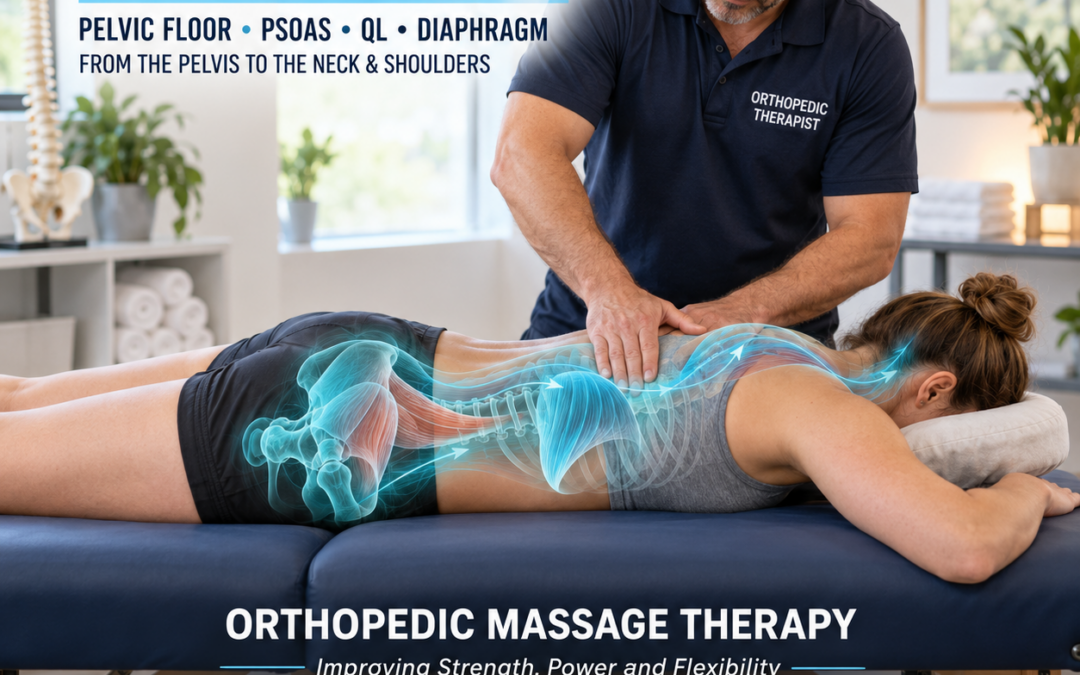
The Diaphragm, Core, and Pelvis: How Breathing Connects the Body’s Center
Breathing happens automatically, so most people do not think about how much movement it requires. Each breath involves more than the lungs. The diaphragm, rib cage, abdominal muscles, spine, pelvis, and pelvic floor all participate.
These structures also help form the body’s core. When they coordinate well, they assist with stability, posture, balance, and movement. When tissues around the lower ribs, abdomen, spine, or pelvis become restricted, breathing and movement may begin to feel different.
A person may notice tightness around the lower ribs, difficulty taking a comfortable deep breath, lower-back tension, reduced rotation, or a feeling that the core cannot relax.
At Orthopedic Massage Therapy in Grapevine, Texas, I consider how the diaphragm, core, pelvis, hips, and spine work together rather than treating each area separately.
What Is the Diaphragm?
The diaphragm is a large, dome-shaped muscle located beneath the lungs. It separates the chest cavity from the abdominal cavity and is the primary muscle involved in breathing.
When you inhale, the diaphragm contracts and moves downward. This creates space for the lungs to expand. The lower ribs should also move outward and in several directions.
When you exhale, the diaphragm relaxes and rises. The rib cage and abdomen move back toward their resting positions.
Although this motion may appear simple, it requires coordination throughout the body’s center.
The diaphragm connects with structures near the:
-
Lower ribs
-
Sternum
-
Thoracic spine
-
Lumbar spine
-
Abdominal wall
-
Fascia surrounding the core
Because of these relationships, restrictions around the diaphragm and lower ribs may influence movement through the back, abdomen, and pelvis.
The Core Is a Three-Dimensional System
The core is often described as the abdominal muscles, but it is much more than the front of the stomach.
The core is a three-dimensional system that surrounds and supports the torso. It includes muscles and connective tissues associated with the abdomen, back, diaphragm, ribs, pelvis, and pelvic floor.
The diaphragm forms the top of this system. The pelvic floor forms its base. The abdominal and spinal muscles surround the front, sides, and back.
These structures manage pressure inside the abdomen and provide support during movement.
When lifting, walking, running, reaching, or changing direction, the core helps transfer force between the upper and lower body. It must be strong enough to create stability while remaining adaptable enough to allow breathing and movement.
A core that is constantly braced or unable to relax may not function as efficiently as one that can respond appropriately to changing demands.
How Breathing and the Pelvic Floor Coordinate
As the diaphragm moves during breathing, pressure changes occur throughout the abdominal cavity.
During a relaxed inhale, the diaphragm moves downward, and the pelvic floor generally responds to the change in pressure. During exhalation, both structures return upward.
This does not mean that everyone’s breathing pattern is identical. Pain, stress, pregnancy, childbirth, surgery, injury, athletic training, and long-standing habits may affect coordination through the core and pelvic region.
If the rib cage does not expand well, another area may attempt to create the needed movement. The abdomen may brace, the shoulders may lift, or the lower back may increase its arch.
The body is adaptable and will find a way to breathe. However, repeated compensation may contribute to tightness or fatigue in the muscles being asked to work harder.
Stress Can Change Breathing Patterns
Stress may cause breathing to become faster and shallower. Instead of expanding through the lower ribs and abdomen, a person may rely more heavily on the upper chest, neck, and shoulders.
This can contribute to tension around the:
-
Neck and upper shoulders
-
Chest
-
Upper and middle back
-
Lower ribs
-
Abdomen
-
Lower back
A guarded breathing pattern may also accompany pain. When an area hurts, the body may brace around it and reduce movement.
Over time, the tissues involved in this protective pattern may become restricted. The person may continue breathing and moving this way even after the original stress or injury has improved.
Orthopedic massage therapy does not treat anxiety, lung disease, or other medical conditions. However, addressing muscular and fascial restrictions may help the body feel more comfortable during normal breathing and movement.
The Lower Thoracic Spine and Rib Cage
The thoracic spine connects with the ribs and helps the torso rotate, bend, and extend.
The lower thoracic spine is located near the bottom of the rib cage, just above the lumbar spine. It is closely connected to the diaphragm and abdominal region.
When the lower ribs and thoracic spine become restricted, the lumbar spine may compensate. A person may create more movement in the lower back when turning, reaching overhead, or taking a deep breath.
The individual may experience lower-back tightness even though the original restriction involves the lower thoracic spine or rib cage.
This is one reason treating only the painful lumbar muscles may not completely address the pattern.
Sitting and Breathing
Many people spend hours sitting at desks, driving, or using electronic devices.
Sitting is a normal activity, and there is no single perfect sitting posture. However, staying in one position for a long time can reduce movement through the hips, spine, and rib cage.
A person may sit with the torso rounded, lean toward one side, or remain rotated toward a screen. This may limit the ability of the lower ribs to expand evenly.
Someone may also sit with the abdomen continuously braced or compressed. When standing, the body may need time to adjust and restore movement through the hips, pelvis, and rib cage.
Regularly changing positions and allowing the body to move in different directions may be more helpful than attempting to maintain a rigid posture all day.
Previous Injuries and Surgery
An injury involving the ribs, spine, abdomen, shoulder, hip, or pelvis may affect breathing and core movement.
The body may limit motion around the injured area to provide protection. After abdominal or orthopedic surgery, a person may also adopt a guarded posture and take smaller breaths because movement feels uncomfortable.
This protective response is understandable and often necessary during early healing. However, the pattern may remain after the tissues have healed and the person has received medical clearance.
Scar tissue, fascial restrictions, and muscular guarding may influence how the ribs, abdomen, and pelvis move together.
Post-surgical massage should respect the healing process and follow the recommendations of the client’s physician or rehabilitation team. Treatment is never performed over an area that has not healed appropriately.
Childbirth and the Body’s Center
Pregnancy and childbirth can create significant changes throughout the abdomen, pelvis, diaphragm, ribs, and spine.
As the body adapts during pregnancy, the position of the rib cage and pelvis may change. The abdominal wall stretches, breathing mechanics may shift, and the lower back and hips may take on different demands.
Both vaginal and cesarean births may affect tissues through the core and pelvis. Following appropriate healing and medical clearance, some individuals continue to experience restrictions, altered breathing patterns, or compensation through the hips and spine.
Each person’s experience is different. Treatment should be respectful, individualized, and based on comfort and consent.
Athletic Performance and Breathing Mechanics
Athletes depend on the core to transfer force, maintain balance, and control movement. They also need efficient breathing during training and competition.
An athlete who constantly braces the abdomen may create stiffness through the torso. This may reduce rotation or make it more difficult to breathe freely during activity.
Sports such as running, football, gymnastics, swimming, tennis, golf, and weightlifting all require coordination between breathing, spinal movement, and pelvic stability.
Restrictions around the ribs, diaphragm, or core may affect performance even when the athlete does not report pain. They may notice reduced endurance, limited rotation, stiffness while reaching, or difficulty recovering between efforts.
Orthopedic massage therapy may help address soft-tissue restrictions that interfere with comfortable movement. It does not replace conditioning, coaching, medical evaluation, or respiratory care.
Fascia Connects the Entire System
Fascia is connective tissue that surrounds and links structures throughout the body.
The fascia associated with the diaphragm connects with tissues around the ribs, spine, abdomen, and pelvis. A restriction in one region may influence tension elsewhere.
For example, restrictions near the lower ribs may affect movement through the lower thoracic spine. Abdominal tension may influence how the pelvis and lumbar spine coordinate. A guarded area following injury or surgery may contribute to a broader compensation pattern.
Myofascial release may encourage restricted tissues to soften and move more freely. Treatment should be gentle, purposeful, and adapted to the individual.
What Treatment May Include
Depending on the client’s needs, treatment may include careful work around the:
-
Lower ribs
-
Lower thoracic spine
-
Lumbar spine
-
Diaphragm region
-
Abdominal wall
-
Core
-
Pelvis
-
Hips
-
Fascia connecting these areas
Not every client needs treatment in every area.
The abdomen, ribs, and pelvis may feel personal or sensitive. Before beginning, I explain the treatment plan, which areas I recommend addressing, and where my hands will be placed.
I continue checking with the client throughout the session. The client can ask questions, request a change, decline work in any area, or stop the treatment at any time.
When Breathing Symptoms Require Medical Attention
Difficulty breathing can have serious medical causes. Massage therapy is not appropriate for diagnosing or treating respiratory or cardiac conditions.
Seek prompt medical attention for symptoms such as:
-
Sudden or severe shortness of breath
-
Chest pain or pressure
-
Blue or gray lips
-
Dizziness or fainting
-
Difficulty breathing after an injury
-
New or rapidly worsening symptoms
-
Breathing difficulty accompanied by weakness, confusion, or unusual sweating
Orthopedic massage therapy may address soft-tissue restrictions, but concerning breathing symptoms require evaluation by an appropriate healthcare professional.
Helping the Body Feel More Open and Connected
Clients sometimes describe feeling more open, relaxed, upright, or balanced after treatment around the ribs, core, back, and pelvis.
They may feel as though breathing and movement require less effort. These experiences may reflect reduced muscular guarding and improved soft-tissue mobility.
The goal is not to force a deep breath or create a perfectly symmetrical body. It is to help the tissues move more comfortably and allow the body’s center to coordinate more naturally.
Orthopedic Massage Therapy in Grapevine, Texas
The diaphragm, core, lower ribs, spine, and pelvis are part of one connected system. Restrictions in one area may influence posture, balance, stability, and movement elsewhere.
Orthopedic massage therapy looks beyond the location of discomfort to understand how these regions may be working together.
If you feel restricted through your ribs, abdomen, lower back, hips, or pelvis, an individualized orthopedic massage session may help address the muscular and fascial patterns involved.
Improving Strength, Power and Flexibility
Text: 817-305-6548
Website: OmassageT.com
Location: 110 S Barton St #6
Grapevine, Texas
76051