Why Sitting All Day Can Change the Way Your Body Moves
Sitting is a normal part of everyday life. We sit at work, in the car, at home, while eating and while using our phones or computers.
The problem is not that sitting is automatically bad. The bigger issue can be spending long periods in the same position without enough movement.
Over time, prolonged sitting may affect how your hips, pelvis, lower back, core and upper body move. Some people notice stiffness when they stand up. Others may experience tension in their lower back, hips, shoulders or neck.
Understanding how sitting affects movement can help you become more aware of your body and the importance of regular movement.
What Happens to Your Body When You Sit?
When you sit, your hips remain bent and your pelvis supports your body weight. Your spine also adapts to the position of your body.
If you sit for a short period, your body can easily change positions afterward.
But when you spend hours sitting without moving very much, your body may become accustomed to that position.
You may notice:
-
Tightness when standing
-
Stiff hips
-
Lower back tension
-
Upper back stiffness
-
Shoulder tension
-
Reduced flexibility
-
A feeling of being “stuck” after sitting
These experiences can vary from person to person.
Your Hips Spend a Lot of Time in One Position
The hips are designed to move in many directions.
But sitting keeps the hips in a relatively fixed, bent position.
When you eventually stand, walk or exercise, your hips need to transition from that position into movement.
Regular movement throughout the day gives your body more opportunities to change positions and use different ranges of motion.
This is one reason simple activities such as standing up, walking around and changing positions can be valuable during a long workday.
Your Pelvis and Lower Back Are Connected
Your pelvis sits between your hips and lower spine.
When you sit, the position of your pelvis influences how your lower back is positioned.
There is no single “perfect” sitting position that everyone must maintain all day. Bodies are designed to move.
Changing positions can be more useful than trying to hold yourself rigidly in one posture for hours.
Your body needs both stability and mobility.
What About the Upper Back?
Sitting at a desk often involves looking forward at a computer screen.
Over time, people may gradually move their head and shoulders forward while concentrating on their work.
The upper back and shoulders can then spend hours in a relatively fixed position.
This can contribute to feelings of stiffness or muscle tension.
The solution does not necessarily have to be complicated.
Standing up, walking, reaching, rotating gently and changing positions throughout the day can give your body a break from staying still.
Your Core Is Involved Too
Your core is more than your abdominal muscles.
The muscles surrounding your trunk, pelvis and lower back help stabilize your body while you sit, stand and move.
When you sit for long periods, your body is constantly managing the position of your trunk.
Core performance is not simply about having strong abdominal muscles. It also involves coordination between the core, pelvis, hips and spine.
That coordination becomes important when you stand up and begin moving again.
Sitting Can Affect How You Move Afterward
One of the most noticeable times people feel the effects of prolonged sitting is when they finally get up.
You may feel stiff for the first few steps.
Your hips may feel restricted.
Your lower back may feel tight.
Your body may simply need a little time to transition from being stationary to moving again.
This does not necessarily mean something is injured. It can simply be a reminder that the human body is designed for movement.
Movement Breaks Matter
You do not necessarily need a complicated exercise routine to introduce more movement into your day.
Try changing positions regularly.
For example:
Stand up.
Walk for a few minutes.
Take a few slow breaths.
Move your shoulders.
Move your hips.
Change your sitting position.
Look away from your screen.
These small changes can help break up long periods of inactivity.
If a particular movement causes pain, stop and seek appropriate professional guidance.
Sitting and Athletes
Athletes are not immune to the effects of prolonged sitting.
A runner may train for an hour and then spend several hours sitting at work or school.
A high school football player may practice intensely and then sit through classes, homework and travel.
The body experiences both activity and inactivity.
Recovery is not just about what happens during training. How you move—or don’t move—during the rest of the day can also influence how your body feels.
Previous Injuries Can Make Sitting Feel Different
Someone who has experienced a previous hip, back or leg injury may notice sitting differently from someone without that history.
An old injury can sometimes influence movement habits.
A person may shift their weight, favor one side or change how they get up from a chair.
Over time, these habits can become automatic.
When working with a client, understanding previous injuries and daily activities can provide useful context for understanding how the person moves.
How Orthopedic Massage Can Fit Into a Movement-Focused Approach
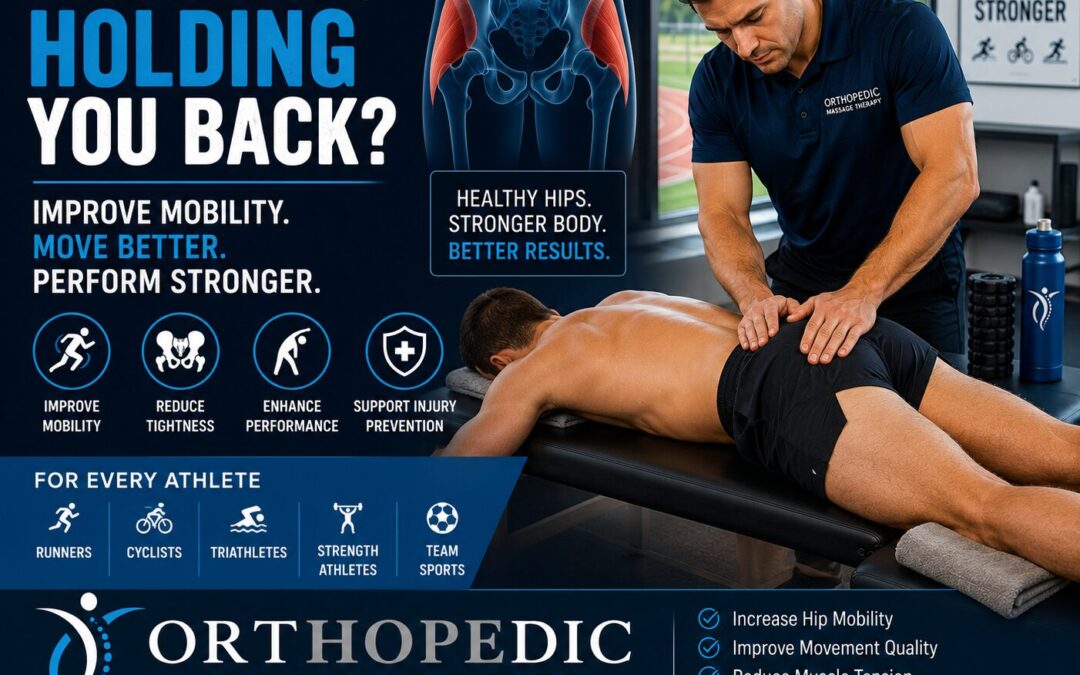
Orthopedic massage therapy can be one part of a broader approach to maintaining mobility and supporting recovery.
At OmassageT.com in Grapevine, Texas, the focus is not simply on where someone feels tension.
The body is considered as a connected system.
Depending on the individual, an orthopedic massage session may involve attention to areas such as the hips, pelvis, lower back, upper back and surrounding soft tissues.
The goal is to support comfortable movement while working with areas of muscular restriction and tension.
Pain-Free Work Matters
A comfortable massage experience can allow the body to relax.
At OmassageT.com, the approach is centered around pain-free orthopedic massage therapy.
The goal is not to force the body into a position or create unnecessary discomfort.
Instead, the session focuses on working with the body while supporting relaxation, mobility and movement.
Your Body Needs Movement
The human body is designed to move.
Sitting is not something you need to fear or completely eliminate. Instead, consider how much time you spend in one position and how often you give your body an opportunity to move.
Your hips, pelvis, core, spine and shoulders all participate in movement.
Small changes throughout the day can help you become more aware of how your body feels.
And when you do experience persistent pain, significant stiffness or unexplained symptoms, an appropriate healthcare professional can help determine what may be happening.
Improving Strength, Power and Flexibility
At OmassageT.com, the philosophy is centered around Improving Strength, Power and Flexibility.
That includes understanding how the body works as a connected system.
Your sitting habits, previous injuries, daily activities and movement patterns can all provide important context.
Orthopedic massage therapy can be part of a larger approach to supporting mobility, balance, stability and comfortable movement.
The goal is not simply to sit differently.
The goal is to keep your body moving.
OmassageT.com
110 S Barton #6
Grapevine, Texas 76051
817-305-6548