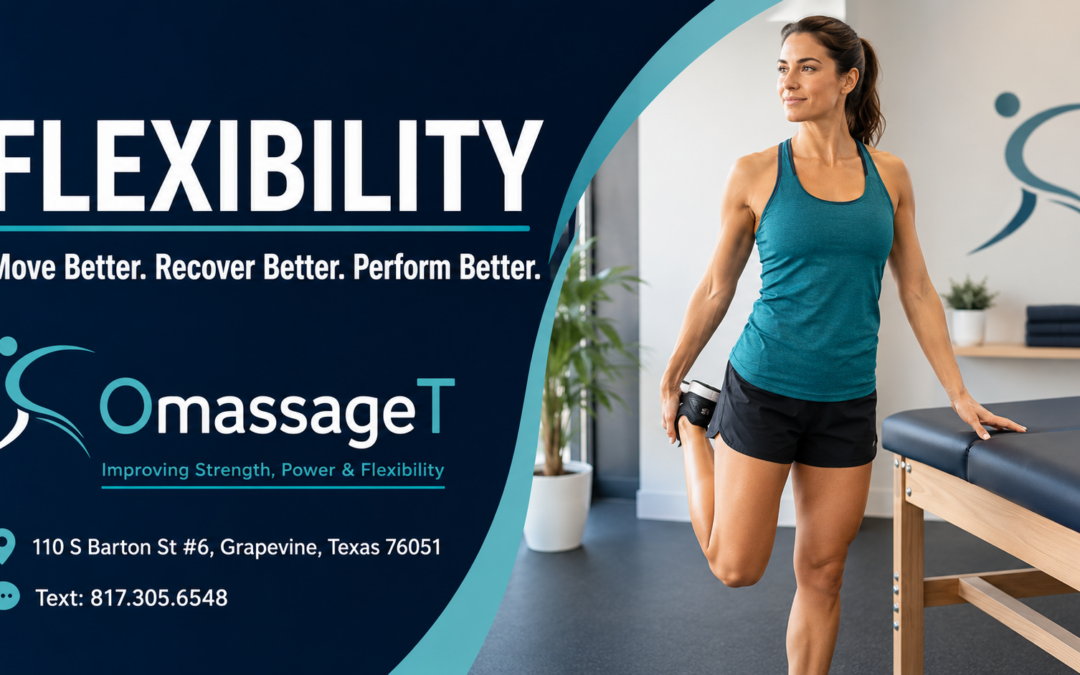
Fascia and Flexibility: Why Stretching Isn’t Always the Whole Answer
When someone feels tight, one of the first things they often think about is stretching.
Stretching can certainly be useful. It can help maintain or improve flexibility and may be an important part of an exercise or recovery program.
But sometimes a person stretches regularly and still feels restricted.
Why?
Because flexibility is more complicated than simply making a muscle longer.
Movement involves muscles, joints, nerves, connective tissues, coordination, stability and the way different parts of the body work together.
One of those connective tissues is fascia.
Understanding the relationship between fascia, mobility and flexibility can provide another way to think about why your body may sometimes feel tight or “bound up.”
What Is Fascia?
Fascia is a connective tissue network that surrounds and connects many structures throughout the body.
It is found around muscles and other tissues and forms part of the body’s overall structural network.
Rather than thinking about fascia as a separate part of the body, it can be helpful to think of it as part of the system that helps connect different areas.
When you move, many structures are moving together.
Your feet, ankles, knees, hips, pelvis, spine, shoulders and arms do not operate completely independently.
The connective tissues between and around these structures are part of that movement environment.
Flexibility Is More Than Stretching
Imagine that someone stretches their hamstrings every day.
They may be able to reach farther over time.
But what if they still feel restricted when they walk, squat or bend?
That tells us something important.
The ability to stretch a muscle is not necessarily the same as the ability to move well.
Movement requires coordination.
It requires stability.
It requires strength.
It requires control.
It requires the nervous system to coordinate everything together.
This is why flexibility should be considered as part of a larger movement system.
Why Can You Still Feel Tight After Stretching?
There are many possible reasons.
You may be spending most of your day sitting.
You may have limited mobility in another joint.
You may have developed a movement pattern after an old injury.
You may have strength or stability limitations.
You may be using certain muscles differently than you used to.
Stress and fatigue can also influence how the body feels.
And soft-tissue restriction may be one factor as well.
This is why simply stretching the area that feels tight does not always address everything contributing to the sensation.
Fascia and the Feeling of Restriction
People describe restricted areas in different ways.
They may say:
-
“It feels tight.”
-
“It feels stuck.”
-
“Something is pulling.”
-
“I feel bound up.”
-
“I can’t move the way I used to.”
-
“One side feels different.”
-
“I can stretch it, but it still feels restricted.”
These descriptions can have many possible explanations.
Fascia may be one piece of the picture, but it should not automatically be blamed for every sensation of tightness or pain.
The body is complex.
Looking at the entire movement pattern can provide more useful information than assuming one tissue is always responsible.
What Is Myofascial Release?
Myofascial release refers to hands-on techniques that work with muscles and surrounding connective tissues.
The goal may be to address areas that feel restricted and support more comfortable movement.
There are many different approaches to myofascial work.
In my practice, I use a pain-free orthopedic massage approach.
That means I am not trying to create unnecessary pain in order to work on an area.
Instead, I focus on comfortable positioning, communication and working gradually with areas that feel restricted.
Why Pain-Free Work Matters
Many people have experienced the idea that therapeutic massage has to hurt.
You may have heard:
“No pain, no gain.”
That is not how I approach orthopedic massage.
If someone is already uncomfortable, I want the session to provide a comfortable environment where they can relax.
The body can be worked with without making the client endure unnecessary pain.
Comfort also allows clients to communicate what they are experiencing.
That communication is an important part of the session.
Stretching and Myofascial Work Can Be Different
Stretching generally involves moving a body part through a range of motion and creating tension within tissues.
Myofascial work involves hands-on techniques directed toward muscles and surrounding connective tissues.
They are not necessarily competing approaches.
They can serve different purposes.
A person may benefit from stretching, strengthening, mobility exercises, massage or other forms of movement work depending on their individual situation.
The important question is not:
“Which one is always better?”
The better question is:
“What does this person need?”
Flexibility Without Stability
There is another important consideration.
Flexibility without stability and control may not produce the movement you want.
Think about an athlete who has a large range of motion but struggles to control that range.
Or consider someone who can stretch deeply but has difficulty maintaining balance.
Movement requires both freedom and control.
This is why I focus on the relationship between:
Strength + Power + Flexibility + Balance + Stability.
These qualities support one another.
Mobility and Flexibility Are Related but Not Identical
People often use the words mobility and flexibility as if they mean the same thing.
They are related, but they are not exactly the same.
Flexibility generally refers to the ability of tissues and joints to move through a range.
Mobility is often used more broadly to describe how well you can actively control movement through that range.
For example, someone may have enough passive flexibility to move their leg into a certain position but have difficulty actively controlling the movement.
That distinction can be especially important for athletes.
Your Previous Injuries Can Matter
An old injury can change the way you move.
You may have protected an area when it hurt.
You may have developed a different walking pattern.
You may have shifted your weight.
You may have avoided certain movements.
Even after the original pain improves, those habits can sometimes remain.
This is one reason I ask about previous injuries when working with clients.
The history of your body can provide useful information about the way you move today.
Sitting Can Influence How You Feel
Daily habits matter too.
If you spend hours sitting, your body remains in a relatively limited position for an extended period.
You may stand up and immediately feel stiff.
That does not necessarily mean that something is damaged.
It may simply be your body’s response to spending a long time in one position.
Regular movement throughout the day can be helpful.
Stand up.
Walk.
Change positions.
Move your hips.
Move your shoulders.
Take comfortable breaths.
Give your body opportunities to experience different positions.
Your Core and Pelvis Are Part of Flexibility
Flexibility is not just about the muscle you are trying to stretch.
Your pelvis and core influence how you control movement.
Consider a simple forward bend.
Your spine, pelvis, hips and legs all participate.
If one area moves differently, another area may compensate.
This is why looking at the whole body can be useful when someone feels restricted.
A limitation in one area may change the way another area moves.
Again, that does not prove that one area is causing another area’s pain.
It simply demonstrates why movement is interconnected.
Fascia and Athletic Movement
Athletes repeatedly ask their bodies to produce and control force.
Running, jumping, cutting, throwing and lifting all require coordination between multiple areas.
Mobility restrictions can affect how an athlete performs a movement.
At the same time, an athlete may have plenty of flexibility but still need better stability or control.
This is why recovery should not be reduced to stretching alone.
Athletes may benefit from a combination of appropriate training, mobility work, strength work, recovery, sleep, nutrition and professional care when needed.
Orthopedic massage therapy can be one part of that overall approach.
What Clients May Notice After a Session
After orthopedic massage, some people tell me they feel:
-
More open
-
More relaxed
-
More balanced
-
Less restricted
-
More comfortable moving
-
More stable
-
Taller
-
As though they are floating
When someone says they feel taller, I explain that they have not actually become taller.
They may simply be experiencing their natural posture with less perceived restriction.
When the body feels more relaxed and movement feels easier, standing and moving can feel noticeably different.
Looking Beyond the Stretch
Stretching can be valuable.
But if you constantly stretch an area and still feel restricted, it may be worth looking at the bigger picture.
Ask yourself:
-
How much do I sit each day?
-
Am I moving regularly?
-
Have I had a previous injury?
-
Does one side feel different from the other?
-
Do I have enough strength to control my movement?
-
Do I feel stable?
-
Am I able to move comfortably through my available range?
-
Are other areas of my body participating in the movement?
These questions can help you think about flexibility as part of an entire movement system.
Orthopedic Massage and Restricted Movement
At OmassageT.com, orthopedic massage therapy focuses on helping people move more comfortably.
My approach may include myofascial techniques when appropriate, while considering the relationships between the core, pelvis, hips, spine, shoulders and other areas of the body.
The goal is not to force the body into a particular position.
It is to work with the body.
The session is designed to be pain-free, comfortable and individualized.
Massage is not a substitute for medical evaluation, physical therapy or other appropriate healthcare. Persistent, severe, unexplained or worsening pain should be evaluated by an appropriate healthcare professional.
Flexibility Is About More Than How Far You Can Stretch
Being flexible is not simply about touching your toes.
True functional movement involves the ability to move, control, stabilize and use your body effectively.
Fascia is one part of that system.
Your muscles, joints, nervous system, core, pelvis and movement patterns are also part of the picture.
That is why stretching can be useful without necessarily being the entire answer.
At OmassageT.com in Grapevine, Texas, the focus is on Improving Strength, Power and Flexibility through a whole-body approach to movement.
The goal is not simply to stretch farther.
The goal is to help you move better.
Orthopedic Massage Therapy in Grapevine, Texas
OmassageT.com
110 S Barton #6
Grapevine, Texas 76051
817-305-6548
Improving Strength, Power and Flexibility
Pain Relief by Improving/Repairing Core Performance