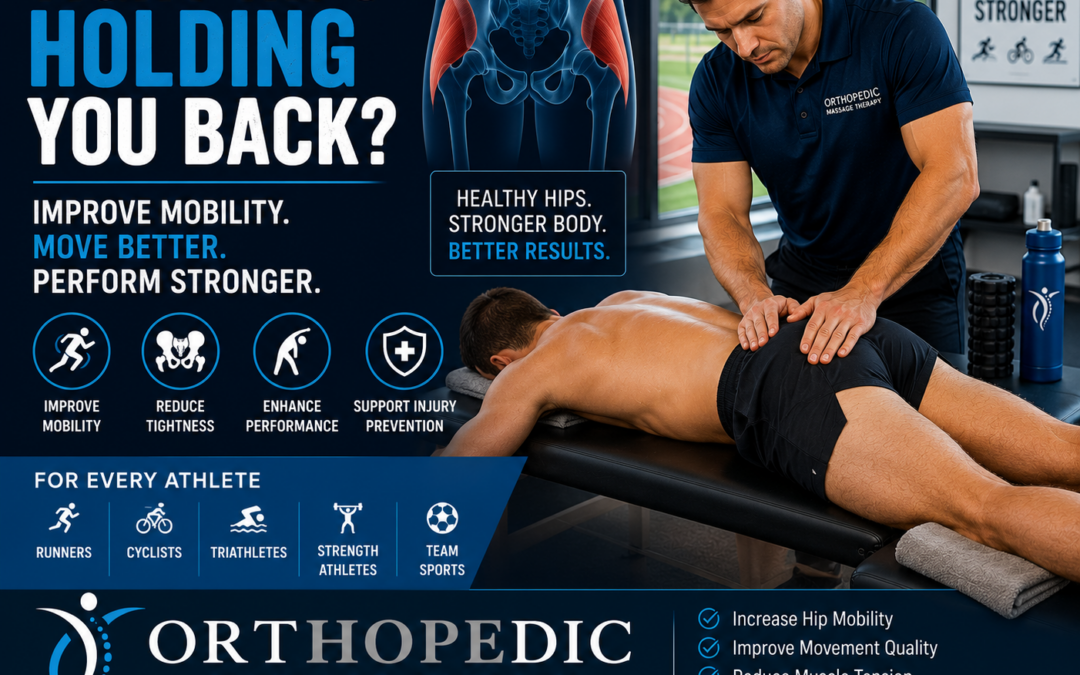
Running Injuries: Why the Pain May Not Start Where You Feel It
When a runner feels pain, the first instinct is usually to focus on the painful area.
If your knee hurts, you think about your knee.
If your hip hurts, you think about your hip.
If your foot hurts, you think about your foot.
That makes sense.
But running is a full-body movement, and the place where you feel discomfort is not necessarily the only part of the body involved in the movement pattern.
A runner’s feet, ankles, knees, hips, pelvis, core and upper body all work together during every stride.
This is why understanding running injuries and movement patterns can require looking beyond the location of the pain.
Pain Location and Movement Patterns Are Not Always the Same Thing
Pain is real and important.
But pain location does not automatically identify the source of a problem.
For example, a runner may experience discomfort around the knee while also having differences in how the hip, ankle or foot moves.
That does not prove that the hip or ankle caused the knee pain.
There can be many reasons for knee pain.
The important point is that the entire movement pattern can provide useful information.
This whole-body perspective is part of how I approach orthopedic massage therapy.
Running Is a Repetitive Movement
Running requires thousands of repeated movements.
Each stride involves the interaction of multiple joints and muscle groups.
Your foot contacts the ground.
Your ankle responds.
Your knee moves.
Your hip and pelvis help control the leg.
Your core stabilizes your trunk.
Your arms and upper body contribute to balance and coordination.
Then the cycle repeats.
When you multiply this movement by the number of steps taken during a training session, small differences in movement can become repeated many times.
The Feet Are Connected to the Hips
Your feet are your connection with the ground.
The way your foot and ankle move influences what happens farther up the leg.
The knee sits between the ankle and hip.
The hip connects the leg to the pelvis.
The pelvis connects the lower body to the spine.
This creates a chain of movement.
That does not mean that a problem in one area automatically causes a problem somewhere else.
Instead, it shows why runners can benefit from considering the entire movement system.
Knee Pain Is a Good Example
Knee pain is common among runners, but there are many possible causes.
A runner may have pain related to training load, an acute injury, biomechanics, tissue irritation, strength or mobility limitations, or other factors.
Because the causes can vary, knee pain should not automatically be attributed to one specific muscle or joint.
From a movement perspective, however, it can be useful to consider how the knee works with the ankle, hip and pelvis.
The goal is to understand movement—not to guess at a diagnosis.
The Hip and Pelvis
The hip and pelvis play important roles in running.
The hip needs enough mobility to allow the leg to move.
At the same time, the body needs enough stability to control that movement.
The pelvis also moves as part of the running stride.
If a runner develops a different movement pattern after an injury, changes in training or another factor, the hips and pelvis may participate differently.
This is one reason I pay attention to the relationship between the hips, pelvis and core.
The Core Helps Connect the Body
Your core is not just your abdominal muscles.
It helps connect the upper and lower body and contributes to stability during movement.
When running, the legs repeatedly produce force while the trunk remains controlled.
The core helps manage that relationship.
This is one reason I use the concept of core performance in my work.
A runner needs more than strong legs.
They also need the ability to stabilize, coordinate and control their body while moving.
Balance and Stability During Running
Running requires balance on every stride.
At different moments, one leg supports the body while the other moves forward.
The body has to remain controlled while traveling through space.
That requires constant adjustments.
The feet, ankles, knees, hips, pelvis and core all contribute.
If one side feels different from the other, that can be useful information.
It does not necessarily mean that something is injured.
It simply tells you that the body may not be moving identically on both sides.
Previous Injuries Can Change Running Mechanics
An old injury can influence movement long after the initial pain has improved.
Imagine a runner who injured an ankle.
During recovery, they may have reduced the amount of weight they placed on that foot.
They may have changed their stride.
They may have relied more heavily on the opposite leg.
Eventually, the ankle may feel normal again.
But the runner may have developed a different movement habit.
This is one example of compensation.
The body adapts to what it experiences.
Training Changes Can Also Matter
Not every running problem is related to an injury.
Changes in training can also affect how the body feels.
A runner may suddenly increase mileage.
They may add hills.
They may begin speed training.
They may change surfaces.
They may start running more frequently.
They may add strength training.
Any significant change in physical demand can affect recovery needs.
This is why looking at the runner’s recent training history can be useful.
When Tightness Appears in Another Area
Sometimes a runner notices that one area feels unusually tight.
For example:
-
Calves feel tight after a long run.
-
One hip feels different from the other.
-
The lower back feels stiff.
-
The hamstrings feel restricted.
-
One side of the body feels more tired.
There can be many explanations for these sensations.
They may be related to training, fatigue, movement patterns, recovery or other factors.
Rather than assuming one specific cause, I prefer to consider the entire picture.
Fascia and Running
Fascia is connective tissue that surrounds and connects many structures throughout the body.
When runners repeatedly load their bodies, they are also repeatedly loading the tissues involved in movement.
Some runners describe certain areas as feeling bound up or restricted.
Myofascial work may be used during an orthopedic massage session to address areas that feel restricted.
The goal is to support comfortable movement rather than force the body through painful treatment.
Pain-Free Orthopedic Massage
My approach is based on pain-free orthopedic massage.
I do not believe that a runner needs to experience significant pain during a massage session for the work to be worthwhile.
Running itself already provides a significant physical demand.
Recovery should provide an environment where the athlete can relax and communicate.
If something is uncomfortable, the athlete should be able to say so.
The session can then be adjusted accordingly.
Why Looking Beyond the Pain Can Be Useful
Suppose a runner comes in with knee discomfort.
I do not want to ignore the knee.
But I may also consider the surrounding movement system.
How are the hips moving?
How is the pelvis participating?
How does the athlete balance?
Is one side noticeably different?
What is the history of previous injuries?
What does the athlete’s training schedule look like?
Are there areas that feel restricted?
These questions do not provide a medical diagnosis.
They provide context.
Mobility and Stability Work Together
Runners need mobility.
But they also need stability.
A joint needs enough movement to perform its function.
The surrounding muscles and nervous system need enough control to manage that movement.
This is why I often emphasize both mobility and stability.
Too much focus on one quality can overlook the other.
A runner may benefit from improving available movement while also developing the strength and control needed to use that movement.
Flexibility Is Only One Piece
Flexibility can be useful for runners.
But it is not the entire picture.
Running also requires:
Strength
Power
Balance
Stability
Mobility
Coordination
Recovery
These qualities interact.
That is why my approach focuses on the broader concept of Improving Strength, Power and Flexibility.
When Pain Should Be Evaluated
Runners should not assume that every painful area is simply a tight muscle.
Significant or persistent pain can require professional evaluation.
If there is major swelling, inability to bear weight, significant weakness, numbness, an acute injury or worsening symptoms, an appropriate healthcare professional should evaluate the situation.
Massage therapy does not replace medical diagnosis.
I am a massage therapist, not a doctor.
My role is to provide massage therapy within my scope of practice and to recognize when another type of care may be appropriate.
Supporting the Whole Runner
Every runner has a different history.
A high school cross-country athlete may have different demands from a marathon runner.
A recreational runner may have different needs from a competitive athlete.
Someone returning from an injury may have different goals from someone preparing for a race.
That is why individualized attention matters.
The focus is on the person—not simply the body part that hurts.
Running and the Bigger Picture
When you run, your body works as a team.
Your feet connect with the ground.
Your legs produce force.
Your hips and pelvis transfer movement.
Your core helps stabilize your trunk.
Your upper body contributes to balance and coordination.
Your body repeats this process thousands of times.
So when something hurts, it can be useful to ask more than:
“Where does it hurt?”
You can also ask:
“How am I moving?”
“What has changed?”
“Have I had an injury before?”
“Have I changed my training?”
“Does one side feel different?”
These questions can help provide a broader understanding of your movement.
Orthopedic Massage for Runners in Grapevine, Texas
At OmassageT.com, I use a pain-free orthopedic massage approach for clients who want to support comfortable movement, recovery and performance.
My work with runners considers the relationship between the feet, legs, hips, pelvis, core, spine and upper body, rather than automatically focusing only on the location of discomfort.
Massage is one part of a larger approach to athletic health.
Appropriate training, recovery, sleep, nutrition, strength work and professional medical care when needed are all important.
The goal is to help you understand your body and support the qualities that allow you to keep moving:
Balance. Stability. Mobility. Strength. Power. Flexibility.
Orthopedic Massage Therapy in Grapevine, Texas
OmassageT.com
110 S Barton #6
Grapevine, Texas 76051
817-305-6548
Improving Strength, Power and Flexibility
Pain Relief by Improving/Repairing Core Performance