Pain-Free Orthopedic Massage: Why Comfort Matters During Treatment
When people hear the words orthopedic massage, they sometimes imagine deep pressure, painful techniques or a massage that leaves them feeling sore afterward.
That is not how I approach orthopedic massage.
At OmassageT.com, my approach is based on pain-free orthopedic massage.
I believe comfort matters during treatment.
The goal is not to make someone tolerate pain.
The goal is to work with the body in a way that allows the client to communicate, relax and participate in the process.
Does Massage Have to Hurt to Work?
One of the most common ideas about massage is that more pressure must mean better results.
That is not necessarily true.
Pain is not a measurement of how effective a massage session is.
A technique can be appropriate without being painful.
In fact, if a person is constantly bracing against uncomfortable pressure, it can become more difficult for them to relax.
That is why I believe massage should be comfortable enough for the client to communicate throughout the session.
What Does Pain-Free Massage Mean?
Pain-free does not mean that a client will never notice anything during a massage.
There may be areas that feel different from others.
A tight or restricted area may be noticeable.
There may be a feeling of pressure, movement or stretching.
The important distinction is that the work should remain within a comfortable range for the individual.
If something does not feel right, the client should say so.
The technique can then be adjusted.
Communication Is Part of the Treatment
A massage session should not be one-sided.
I want clients to communicate with me.
If the pressure is too much, tell me.
If a position is uncomfortable, tell me.
If something feels different, tell me.
This communication allows the session to be individualized.
Every person has a different body, different history and different tolerance for pressure.
Why Comfort Can Matter
When someone is uncomfortable, they may automatically tense their muscles.
That can make it harder to relax.
A person may hold their breath.
They may tighten their shoulders.
They may pull away from the pressure.
The body is communicating that something is not comfortable.
Instead of simply applying more pressure, I believe it is important to listen.
Relaxation and Orthopedic Massage
Relaxation is not the only purpose of orthopedic massage, but it can be an important part of the experience.
Some clients report feeling more relaxed after a session.
Some say they feel lighter or more open.
Others report sleeping more deeply.
These are individual experiences, not guarantees.
For some people, simply having a comfortable environment where they can slow down can be valuable.
Pain Can Create Protective Tension
When something hurts, people often protect it.
For example, someone with shoulder discomfort may hold the shoulder differently.
Someone with back pain may change the way they sit.
Someone with a leg injury may shift their weight.
These protective patterns can change how the rest of the body moves.
The goal of massage is not to force those patterns away.
Instead, comfortable work can be used to address appropriate soft-tissue areas while respecting the person’s condition.
Looking Beyond the Painful Area
One of the principles of my orthopedic massage approach is looking at the body as a whole.
If someone has discomfort around the knee, I may also consider the relationship between the:
-
Foot
-
Ankle
-
Knee
-
Hip
-
Pelvis
-
Core
This does not mean the knee problem necessarily started somewhere else.
It means the body uses these areas together during movement.
The Core and Body Movement
The core is more than the abdominal muscles.
It helps connect the upper and lower body and contributes to stability and movement.
The pelvis is also an important part of this relationship.
When someone changes how they move because of discomfort, the way they use the core and pelvis may change as well.
This is why I use the phrase:
Pain Relief by Improving/Repairing Core Performance.
Mobility Matters
Comfortable movement is one of the goals of orthopedic massage.
Mobility is the ability to move through available ranges of motion with control.
A person may have adequate flexibility but still have difficulty moving comfortably.
Massage may be one part of a broader approach to supporting mobility.
Depending on the situation, mobility work may also involve physical therapy, strengthening, stretching or other forms of rehabilitation.
Flexibility Is Not the Whole Story
People sometimes assume that every movement problem means they need to stretch more.
That is not always the case.
Movement can be affected by strength, stability, coordination, previous injuries, activity levels and many other factors.
The goal is not simply to make every tissue as flexible as possible.
The goal is appropriate movement for the individual.
Balance and Stability
Balance and stability are also important parts of movement.
A person needs mobility to move and stability to control that movement.
Athletes especially need this combination.
A football player needs to accelerate and change direction.
A runner needs to control each step.
A gymnast needs both mobility and stability.
A person walking through the grocery store also relies on balance and stability.
Fascia and Myofascial Work
Fascia is connective tissue that surrounds and connects many structures throughout the body.
Some clients describe areas as feeling tight or “bound up.”
When appropriate, I may incorporate myofascial techniques into a session.
My approach is not to force an area with painful pressure.
The work is gradual and comfortable.
The client remains an active part of the process.
Pain-Free Does Not Mean Gentle All the Time
Pain-free does not necessarily mean that every technique feels like a light relaxation massage.
Orthopedic massage can involve focused work.
It can involve different positions.
It can involve working with specific areas of soft-tissue restriction.
The important part is that the work remains appropriate and comfortable for the individual.
Every Body Responds Differently
Two people can have similar complaints and completely different experiences.
One person may have a history of an old injury.
Another may spend most of the day sitting.
Another may be an athlete training several days a week.
Another may simply notice that one side of the body feels different.
There is no single technique that works the same way for everyone.
Why I Ask Questions
Understanding a client’s history helps provide context.
I want to know what the person is experiencing.
I want to understand their activity level.
Previous injuries can be important.
Daily positions can be important.
Sports and exercise can be important.
The goal is to understand the person rather than simply focus on the location they point to.
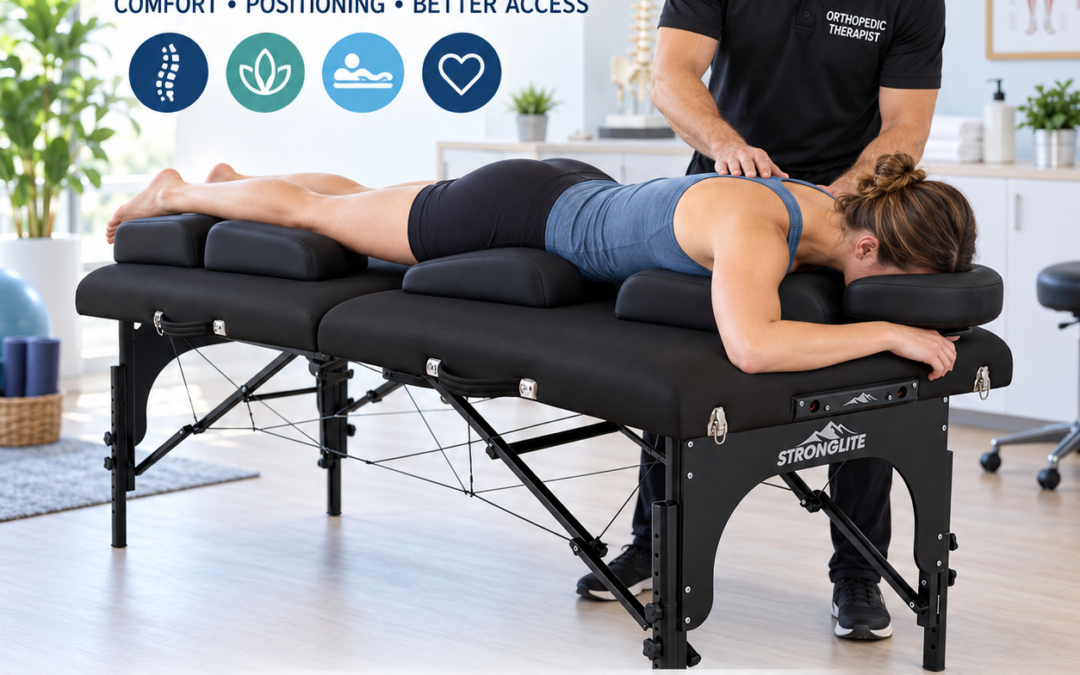
Comfortable Positioning Matters
A client may be moved into different positions during an orthopedic massage session.
Those positions should be comfortable and appropriate.
The body can be supported when necessary.
Clients should be appropriately covered and positioned throughout the session.
Comfort and respect are essential parts of professional massage therapy.
Pain-Free Work Can Help People Communicate
If someone expects massage to hurt, they may assume discomfort is simply something they have to tolerate.
I encourage clients to communicate instead.
You do not have to prove that you can tolerate a certain amount of pressure.
Your feedback helps guide the session.
That makes the treatment more individualized.
Athletes Can Benefit From a Comfortable Approach
Athletes place significant demands on their bodies.
They train.
They compete.
They recover.
They may also have previous injuries that influence how they move.
A pain-free approach allows massage to become part of a broader recovery strategy without making painful pressure the objective.
The focus can remain on mobility, comfort, recovery, balance and stability.
Recovery Is More Than Massage
Massage is one piece of the larger picture.
Recovery also involves:
-
Appropriate training
-
Rest
-
Sleep
-
Hydration
-
Nutrition
-
Mobility work
-
Strength training
-
Rehabilitation when necessary
Massage should complement these areas rather than replace them.
Pain-Free Massage After an Injury
After an injury, additional caution may be necessary.
The type and timing of massage depend on the injury.
Someone recovering from surgery should follow the instructions of their medical and rehabilitation team.
A new injury, severe pain, significant swelling, weakness, numbness or loss of function may require medical evaluation.
Massage should never be used to delay necessary medical care.
Pain-Free Does Not Mean Ignoring Pain
There is an important difference between working comfortably and ignoring pain.
If something hurts, it matters.
Pain can provide information about what the body is experiencing.
The appropriate response depends on the situation.
Sometimes it means changing a massage technique.
Sometimes it means stopping the session.
Sometimes it means recommending that the person seek medical evaluation.
What Clients May Notice After a Session
Everyone responds differently.
Some clients report:
-
Feeling more relaxed
-
Feeling more comfortable
-
Feeling more open
-
Moving more freely
-
Feeling lighter
-
Feeling more balanced
-
Feeling like they are standing taller
Some people even describe feeling as though they are floating.
These are individual experiences.
Massage does not literally make someone taller or cause someone to float.
A person may simply experience a change in comfort, posture or body awareness.
Improving Strength, Power and Flexibility
My philosophy at OmassageT.com is:
Improving Strength, Power and Flexibility.
These qualities are connected to:
Mobility.
Balance.
Stability.
Recovery.
Relaxation.
The body needs both the ability to create movement and the ability to control it comfortably.
Pain Relief by Improving Core Performance
I also use the phrase:
Pain Relief by Improving/Repairing Core Performance.
For me, this represents a whole-body perspective.
Instead of looking only at where someone feels pain, I consider how the body is functioning as a system.
The feet, legs, hips, pelvis, core and upper body all participate in movement.
Understanding those relationships can provide additional context during an orthopedic massage session.
My Goal During a Session
My goal is not to see how much pressure a person can tolerate.
My goal is to provide a professional, comfortable and individualized massage session.
That means listening.
It means communicating.
It means adjusting.
It means respecting the client’s body.
And it means recognizing when something is outside the scope of massage therapy and another healthcare professional should be involved.
Orthopedic Massage in Grapevine, Texas
At OmassageT.com, I provide pain-free orthopedic massage therapy in Grapevine, Texas.
My approach emphasizes comfortable treatment, whole-body movement, mobility, balance, stability and recovery.
I believe massage can be focused and purposeful without making pain the objective.
You do not have to hurt to receive meaningful bodywork.
Orthopedic Massage Therapy in Grapevine, Texas
OmassageT.com
110 S Barton #6
Grapevine, Texas 76051
817-305-6548
Improving Strength, Power and Flexibility
Pain Relief by Improving/Repairing Core Performance