
Why One Side of Your Body Feels Tighter Than the Other: Understanding Muscle Imbalances and Movement
Orthopedic Massage Therapy in Grapevine, Texas | OmassageT.com
Improving Strength, Power and Flexibility
Have you ever noticed that one shoulder feels tighter than the other? Maybe one hip seems less flexible, one leg feels heavier, or you find it easier to turn your head in one direction than the other.
These differences are common. Our bodies are not perfectly symmetrical, and they don’t need to be.
However, when one side consistently feels restricted, uncomfortable, or difficult to move, it may be worth exploring why.
Previous injuries, daily habits, differences in strength, and movement patterns can all influence how your body feels and functions.
At OmassageT.com in Grapevine, Texas, orthopedic massage therapy takes a whole-body approach to muscular discomfort, considering how muscles, fascia, joints, and movement patterns interact.
Understanding why one side feels tighter can be a useful step toward improving comfort, flexibility, and movement.
1. Is It Normal for One Side of Your Body to Feel Different?
Yes. Some degree of asymmetry is normal.
Most people have a dominant hand, preferred leg, or habitual way of performing activities.
If you’re right-handed, for example, you may use your right arm more frequently for lifting, carrying, writing, or reaching.
Athletes may develop additional differences because their sports place unequal demands on different parts of the body.
A baseball pitcher repeatedly throws with one arm. A golfer rotates predominantly in one direction. A soccer player may prefer kicking with one leg.
These differences do not automatically indicate an injury or problem.
The important question is whether the asymmetry is associated with pain, limited movement, or difficulty performing activities.
2. How Previous Injuries Can Create Muscle Imbalances
An old injury may influence movement long after the initial discomfort has improved.
Imagine someone who previously injured their right ankle.
During recovery, they may have shifted more weight onto their left leg to avoid pain.
This temporary adjustment can be helpful during healing.
However, if strength, mobility, or balance does not fully recover, altered movement patterns may continue.
The person might develop differences in how they stand, walk, squat, or transfer weight.
Similar changes can occur following knee injuries, hip injuries, muscle strains, or surgery.
Not every compensation pattern causes pain, but an injury history can provide useful information when evaluating recurring muscular discomfort.
At OmassageT.com, understanding previous injuries helps guide an individualized orthopedic massage session.
3. The Connection Between Your Pelvis and Uneven Muscle Tightness
Your pelvis connects the spine to the lower extremities and helps transfer forces during movement.
The muscles surrounding the pelvis include the gluteals, hip flexors, hamstrings, abdominal muscles, and other stabilizing structures.
These muscles work together during walking, running, standing, and lifting.
If one hip has less available movement than the other, you may compensate through the pelvis or lower back during certain activities.
For example, limited hip rotation on one side may affect how comfortably someone turns or changes direction.
Some individuals experience tightness around the quadratus lumborum, gluteal muscles, or hip flexors.
However, a pelvis that appears slightly tilted or uneven does not necessarily indicate a medical problem.
There is considerable natural variation in pelvic anatomy and posture.
Rather than assuming that asymmetry needs correcting, it is more useful to consider whether a particular movement limitation is relevant to the person’s symptoms.
4. Why One Shoulder May Feel Tighter Than the Other
Shoulder tightness is another common complaint.
One shoulder may feel elevated, restricted, or uncomfortable compared with the other.
Several factors may contribute, including repetitive arm use, sustained working positions, previous injuries, or differences in shoulder mobility.
The shoulder complex involves multiple structures, including the shoulder joint, shoulder blade, collarbone, muscles, and surrounding connective tissues.
Muscles such as the upper trapezius, levator scapulae, pectorals, and rotator cuff contribute to shoulder movement and control.
When one area becomes sensitive or overworked, someone may experience a sensation of tightness.
However, the position of the shoulder alone does not reliably identify the cause of pain.
Orthopedic massage may help address muscular discomfort while considering the person’s overall movement and activity demands.
5. How Fascia Contributes to Movement Differences
Fascia is connective tissue that surrounds and supports muscles, nerves, blood vessels, and other structures.
It contributes to the organization of tissues and helps neighboring structures glide during movement.
Following injury, surgery, or prolonged periods of reduced activity, some tissues may become sensitive or less mobile.
This can contribute to the sensation that one side of the body feels more restricted than the other.
Myofascial release techniques use controlled pressure and gentle movement to address soft-tissue discomfort.
Some individuals experience short-term improvements in pain or range of motion following treatment.
However, there is limited evidence that massage physically breaks apart deep fascial adhesions or permanently corrects structural asymmetry.
At OmassageT.com, myofascial release may be incorporated into an individualized, pain-free orthopedic massage session.
6. Can Sitting All Day Make One Side Feel Tighter?
Prolonged sitting can contribute to stiffness and muscular discomfort, particularly when someone remains in the same position for extended periods.
Many people naturally shift their weight to one side, cross the same leg, or lean toward a computer screen.
These habits may influence which muscles feel fatigued or uncomfortable.
However, there is no single perfect sitting posture that prevents pain.
The body generally benefits from having opportunities to change positions and move throughout the day.
If you work at a desk, consider periodically standing, walking, stretching comfortably, or adjusting your working position.
Frequent movement can help reduce the demands of remaining in one position for too long.
7. Why Athletes Develop Side-to-Side Differences
Athletes frequently develop differences in strength, flexibility, and coordination between sides.
For example, runners may have small differences in stride mechanics or single-leg strength.
Football players may repeatedly push off one leg during certain movements.
Gymnasts may favor one direction when twisting or performing skills.
These adaptations can be normal responses to training.
However, a significant difference associated with pain or reduced performance may deserve further evaluation.
Orthopedic massage and sports massage may help manage muscular soreness and temporary stiffness.
Long-term improvements in strength and movement control generally require appropriate training and rehabilitation.
8. Why Pain-Free Orthopedic Massage Matters
Some people assume that a tighter muscle requires more aggressive pressure.
That isn’t necessarily true.
At OmassageT.com, the philosophy emphasizes pain-free orthopedic massage therapy.
Using comfortable techniques may help clients relax and participate in gentle movement or positioning during treatment.
Sessions may include soft-tissue massage, myofascial release, and individualized approaches to muscular discomfort.
The objective is not to force the body into perfect symmetry.
Instead, treatment focuses on supporting comfortable movement and addressing relevant soft-tissue restrictions.
9. The Relationship Between Muscle Tightness, Balance, and Stability
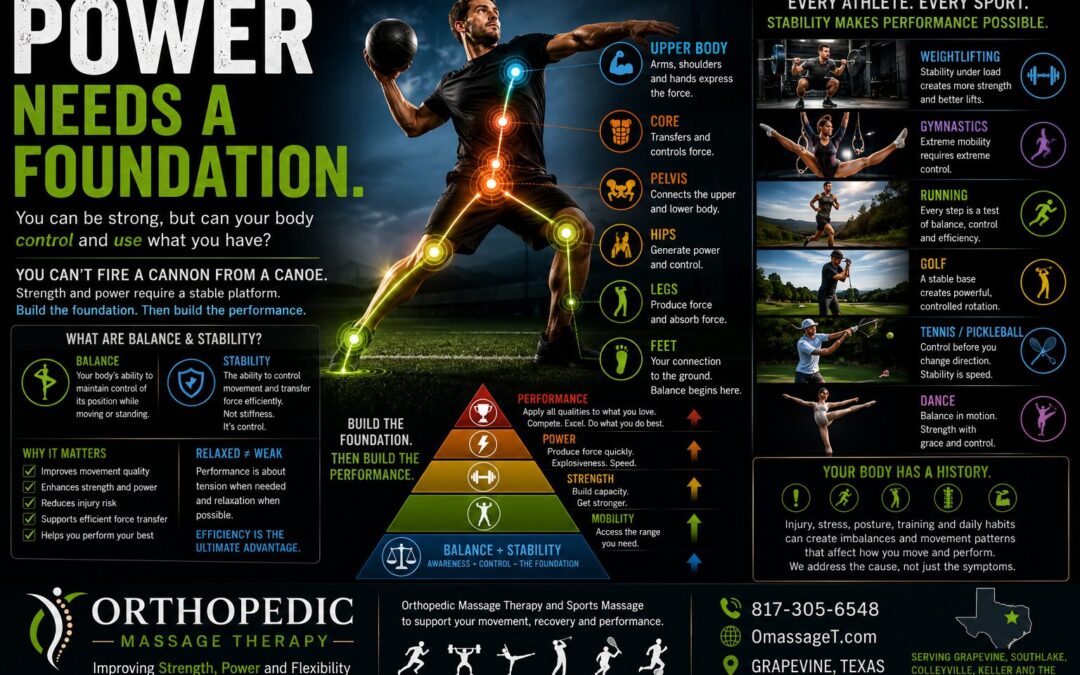
Balance and stability involve coordinated activity among muscles, joints, and the nervous system.
Your brain continuously receives information about body position and movement.
If one side of the body is painful or restricted, you may unconsciously change how you distribute your weight.
For example, someone experiencing discomfort in one hip may prefer standing on the opposite leg.
This can change muscular demands during everyday activities.
However, improving balance does not necessarily require making both sides of the body identical.
The goal is to develop sufficient strength, control, and mobility for the activities you want to perform.
Massage may help manage discomfort, while targeted exercise can help build strength and stability.
10. How to Support More Comfortable Movement
If one side consistently feels tighter, it may help to consider several aspects of your daily routine.
-
Change positions regularly. Avoid remaining in one posture for unnecessarily long periods.
-
Stay physically active. Walking and other comfortable activities help maintain mobility.
-
Develop strength on both sides. Appropriate resistance exercises can help address meaningful strength differences.
-
Consider previous injuries. Incomplete recovery may contribute to movement limitations.
-
Pay attention to symptoms. Persistent pain or worsening restrictions deserve professional evaluation.
Orthopedic massage may complement these strategies by helping reduce muscular discomfort and support relaxation.
11. When Should Uneven Tightness Be Evaluated?
A mild difference in flexibility or muscle tension is usually not a cause for concern.
However, symptoms such as persistent pain, significant loss of motion, or progressive weakness deserve attention.
Sudden one-sided weakness, facial drooping, difficulty speaking, or loss of coordination may indicate a medical emergency and require immediate emergency assistance.
For recurring muscular discomfort without emergency symptoms, an appropriate healthcare assessment can help determine whether massage, exercise, physical therapy, or other treatment is suitable.
Orthopedic Massage Therapy in Grapevine, Texas
Your body doesn’t need to be perfectly symmetrical to move well.
Differences between sides are common, especially among athletes and people who perform repetitive activities.
However, when tightness or restricted movement interferes with comfort or function, understanding possible contributing factors can be valuable.
At OmassageT.com, orthopedic massage therapy emphasizes an individualized, pain-free approach that considers muscles, fascia, previous injuries, and movement patterns.
Whether you’re an athlete seeking comfortable movement or someone managing recurring muscle tension, orthopedic massage may be a helpful part of your overall wellness plan.
The goal isn’t perfect symmetry. It’s helping your body move comfortably and confidently.
Schedule Your Orthopedic Massage Session
OmassageT.com — Orthopedic Massage Therapy
110 S Barton #6
Grapevine, Texas 76051
Call or text: 817-305-6548
Website: OmassageT.com
Improving Strength, Power and Flexibility
