OmassageT.com Orthopedic Massage Therapy
Can Massage Help Sciatica? Understanding the Causes, Symptoms, and Treatment Options
If you’ve ever experienced a sharp, burning pain that starts in your lower back and travels down your leg, you may be dealing with sciatica. For some people, the discomfort is occasional and manageable. For others, it can make walking, sitting, driving, or even sleeping difficult.
One of the most common questions people ask is:
“Can massage therapy help sciatica?”
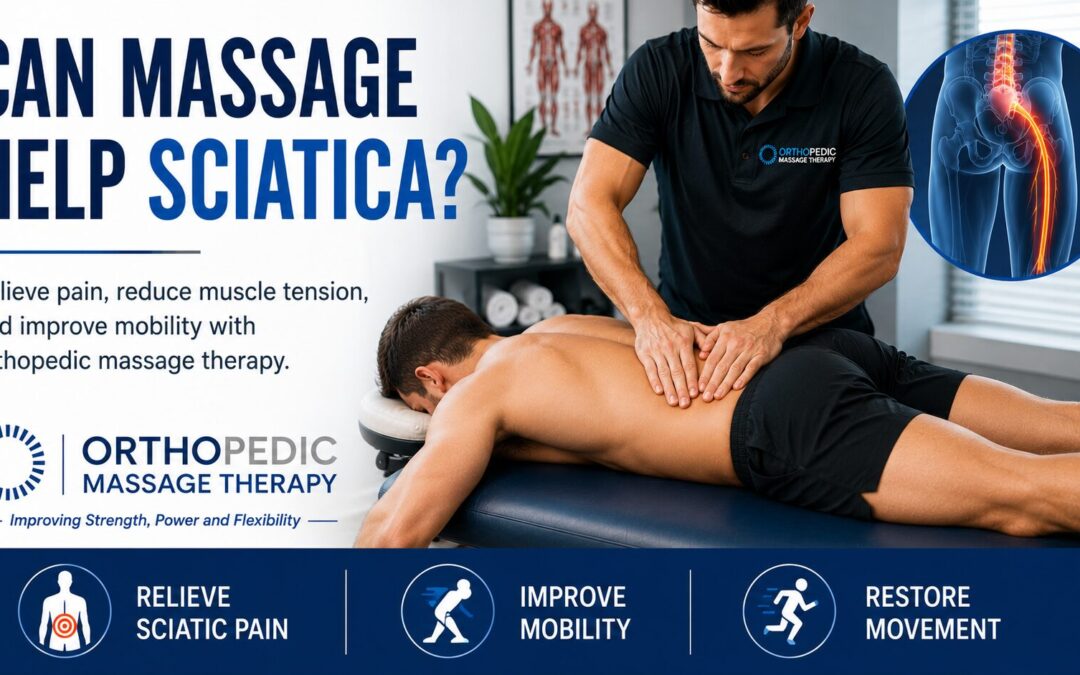
The answer is that massage can be an effective part of a treatment plan for many people with sciatica, particularly when muscle tension or soft tissue restrictions are contributing to symptoms. While massage does not “cure” sciatica, it can reduce pressure on irritated tissues, improve mobility, and help your body move more comfortably.
At Orthopedic Massage Therapy, we work with clients experiencing sciatic pain by evaluating how muscles, fascia, and movement patterns may be affecting the sciatic nerve. Our goal is to address the underlying soft tissue issues—not just the symptoms.
What Is Sciatica?
Sciatica is not a condition by itself. It is a term used to describe pain that follows the path of the sciatic nerve, the largest nerve in the body.
The sciatic nerve begins in the lower spine, passes through the hips and buttocks, and travels down each leg.
When the nerve becomes irritated or compressed, pain can radiate from the lower back into the buttock and down the leg.
Some people feel only mild discomfort, while others experience significant pain that limits their daily activities.
Common Symptoms of Sciatica
Symptoms vary depending on the cause and severity of the nerve irritation.
Common signs include:
- Pain that radiates down one leg
- Burning or tingling sensations
- Numbness in the foot or leg
- Muscle weakness
- Pain while sitting
- Sharp pain when standing up
- Discomfort that worsens after long periods of inactivity
Symptoms usually affect only one side of the body.
What Causes Sciatica?
Several conditions can irritate or compress the sciatic nerve.
Herniated Disc
One of the most common causes is a disc in the spine pressing against the nerve root.
Piriformis Syndrome
The piriformis muscle, located deep in the buttock, can become tight or inflamed and place pressure on the sciatic nerve.
Muscle Tightness
Tight glutes, hip flexors, hamstrings, and lower back muscles can contribute to abnormal movement patterns that increase stress around the nerve.
Spinal Stenosis
Age-related narrowing of the spinal canal may place pressure on nerve roots.
Pregnancy
Changes in posture and body mechanics during pregnancy can sometimes contribute to sciatic pain.
How Orthopedic Massage Can Help
Orthopedic massage focuses on identifying and treating soft tissue dysfunction that may be contributing to your symptoms.
Rather than simply massaging the painful area, treatment looks at how your entire body moves.
For example, restricted hip mobility may force your lower back to compensate, increasing tension around the sciatic nerve.
Treatment may include:
- Myofascial release
- Trigger point therapy
- Deep tissue techniques
- Assisted stretching
- Soft tissue mobilization
- Hip mobility work
Every session is customized based on your symptoms and movement assessment.
Benefits of Massage for Sciatica
Many clients report improvements such as:
Reduced Muscle Tension
Tight muscles surrounding the sciatic nerve may contribute to irritation. Massage helps reduce unnecessary muscle guarding.
Improved Mobility
As muscles become more flexible, everyday movements often become easier.
Better Circulation
Healthy blood flow supports tissue recovery and healing.
Improved Posture
Correcting muscular imbalances may reduce unnecessary stress on the lower back and hips.
Better Quality of Life
When pain decreases, many clients find it easier to work, exercise, and enjoy daily activities again.
What Happens During Your Appointment?
Your first visit begins with understanding why you’re experiencing sciatic pain.
Your therapist may evaluate:
- Walking pattern
- Standing posture
- Hip mobility
- Lumbar movement
- Muscle tension
- Previous injuries
- Daily activities
This assessment helps determine which muscles and soft tissues may be contributing to your symptoms.
No two cases of sciatica are exactly alike.
When Massage Is Appropriate
Massage therapy may be helpful if your sciatic symptoms are related to:
- Muscle tension
- Overuse injuries
- Poor posture
- Repetitive movement
- Sports activities
- Piriformis syndrome
- Limited hip mobility
Massage is often most effective when combined with exercise, stretching, and healthy movement habits.
When You Should See a Doctor First
Massage is not appropriate for every cause of sciatica.
Seek immediate medical care if you experience:
- Loss of bladder or bowel control
- Severe leg weakness
- Progressive numbness
- Sudden symptoms after significant trauma
- Fever with severe back pain
These symptoms require prompt medical evaluation.
Preventing Future Sciatica Flare-Ups
While not every case can be prevented, healthy habits can reduce your risk.
Stay Active
Walking and regular exercise help keep muscles flexible.
Stretch Regularly
Focus on the hips, hamstrings, and glutes.
Strengthen Your Core
Core stability supports your spine and improves movement.
Avoid Sitting Too Long
Take movement breaks throughout the day.
Maintain Good Posture
Proper body mechanics reduce unnecessary stress on your lower back.
Schedule Regular Maintenance Massage
Many clients find that ongoing orthopedic massage helps manage muscle tension before it becomes a larger problem.
Frequently Asked Questions
Can massage cure sciatica?
Massage cannot cure every cause of sciatica, but it can help relieve muscle tension, improve mobility, and reduce symptoms for many people.
Is deep tissue massage good for sciatica?
Deep tissue techniques may be beneficial when tight muscles contribute to nerve irritation. Your therapist will determine the appropriate level of pressure based on your condition.
How many sessions will I need?
Some clients notice improvement after one or two sessions, while chronic cases often benefit from a series of treatments combined with home exercises.
Can massage make sciatica worse?
Temporary soreness after treatment is possible, but massage should not significantly increase your symptoms. Communication with your therapist is important throughout treatment.
Why Choose Orthopedic Massage Therapy?
At Orthopedic Massage Therapy, we take a movement-based approach to pain relief. Rather than simply focusing on where it hurts, we evaluate how your muscles, joints, and connective tissues work together to identify the source of dysfunction.
Our goal is to help you:
- Reduce pain
- Improve mobility
- Restore flexibility
- Recover from injuries
- Return to the activities you enjoy
Every treatment plan is personalized to meet your unique needs.
Ready to Find Relief?
Sciatic pain can interfere with every part of your day—but it doesn’t have to.
If you’re experiencing pain, numbness, or tightness that limits your movement, orthopedic massage therapy may help reduce discomfort and improve your quality of life.
Contact Orthopedic Massage Therapy today to schedule your personalized assessment and take the first step toward moving with greater comfort and confidence.